
Basement Home Office Design for Chicago Remote Workers Creating a Productive Space Below Ground

Chicago's long winters and unpredictable weather mean more of us are working from home than ever before. While many remote workers set up offices on main floors or in spare bedrooms, your basement might be the ideal solution if you're looking for a quiet, dedicated workspace that won't be disturbed by household activity. Basement offices have real advantages for concentration and focus, but they also come with specific design challenges that need thoughtful solutions. In this guide, we'll walk through everything you need to know about creating a basement home office that actually boosts your productivity instead of draining it.
Solving the Lighting Challenge
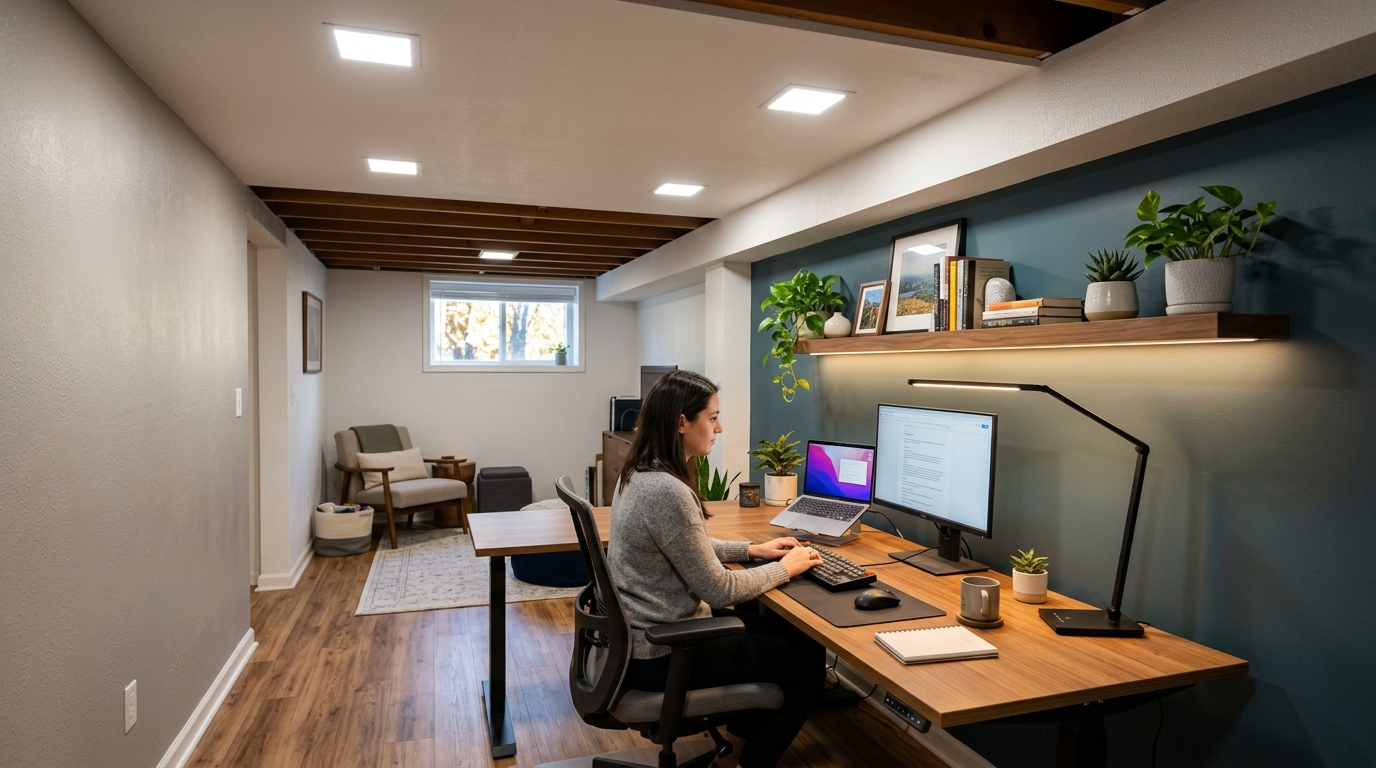
The biggest hurdle most basement office designers face is the lack of natural light. Standard basement windows are often small and positioned high on the walls, which means they let in limited light and require furniture arrangements that don't take advantage of what little natural illumination is available. However, there are several proven strategies to overcome this. First, consider installing egress windows or enlarging existing basement windows if your home's structure allows it. While this is a more significant investment, it can completely transform how your office feels. If major window work isn't in your budget, focus instead on excellent artificial lighting that mimics natural daylight. Invest in full-spectrum LED bulbs rated around 5000K color temperature, which closely resembles natural light and reduces eye strain during long work days.
Layered lighting is critical in a basement office setup. Rather than relying on a single overhead fixture, combine ambient lighting with task lighting at your desk and accent lighting on shelves or artwork. Position your main light source above and slightly behind your monitor to reduce glare and eye fatigue. Many Chicago homeowners also find that adding light shelves—reflective surfaces that bounce light deeper into the space—can extend the reach of both natural and artificial light sources. Mirrors placed strategically opposite your light sources can also double the perceived brightness of your office without consuming any additional energy. The goal is creating a warm, well-lit environment that keeps you alert and energized throughout your workday.
Ventilation and Air Quality Matter
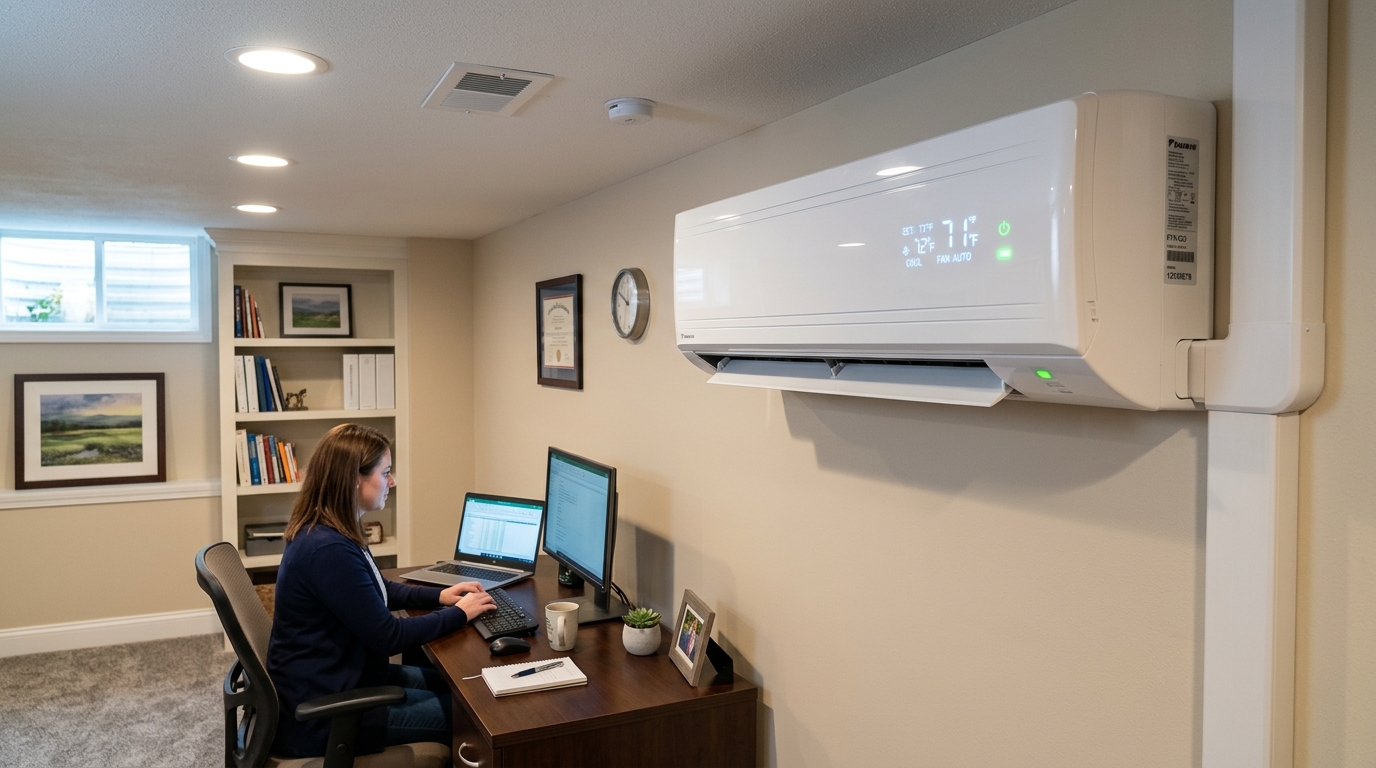
Basements naturally tend toward stuffiness and stale air, especially in Midwest homes where they're often closed off during winter months. Poor air quality doesn't just feel uncomfortable; it genuinely affects your ability to focus, think clearly, and maintain energy levels through the afternoon. Most basements benefit from adding or improving mechanical ventilation, whether that's a dedicated mini-split HVAC unit, an energy recovery ventilator (ERV), or simply upgrading your existing basement ductwork to provide better airflow. If your main HVAC system doesn't reach your basement effectively, installing a separate mini-split system gives you independent temperature and air quality control in your office space.
Beyond mechanical solutions, think about air-moving strategies that cost nothing. Keeping a basement door cracked open on mild days, using a portable air purifier with a HEPA filter, and adding plants that naturally clean air can all make a difference in how your basement office feels. During Chicago's colder months when you can't rely on outdoor air, an air purifier becomes especially valuable for removing dust, pet dander, and other particles that accumulate in basement spaces. The investment in better ventilation will pay dividends in your ability to stay focused and alert during work hours.
Soundproofing for Video Calls
If you're working from home, you probably have regular video calls with colleagues or clients. Basement walls are generally thicker than upper floors, which actually gives you a head start on soundproofing, but you'll still want to take steps to minimize echo and prevent sound transmission from the rest of your home into your office. Start by assessing where sound enters your space: the door, the ceiling where HVAC ducts run, and any gaps around pipes or utilities. Weather stripping around your office door is an easy first step that handles a surprising amount of sound leakage. For the ceiling, consider hanging acoustic panels or drop ceiling tiles that absorb sound rather than reflecting it.
Soft furnishings naturally absorb sound, so a good rug, curtains, and upholstered furniture all contribute to better acoustics. If you need professional-level soundproofing, work with a contractor who specializes in basement remodeling—they can install acoustic panels, add mass-loaded vinyl barriers, or even upgrade your door to a solid-core or acoustic model. For many Chicago homeowners, the combination of a closed solid-core door, some acoustic panels, and strategic furniture placement is sufficient to eliminate most echo and reduce noise transmission. The goal isn't creating a completely silent room; it's preventing your family members' background noise from being picked up during your calls.
Ergonomics and Layout Planning
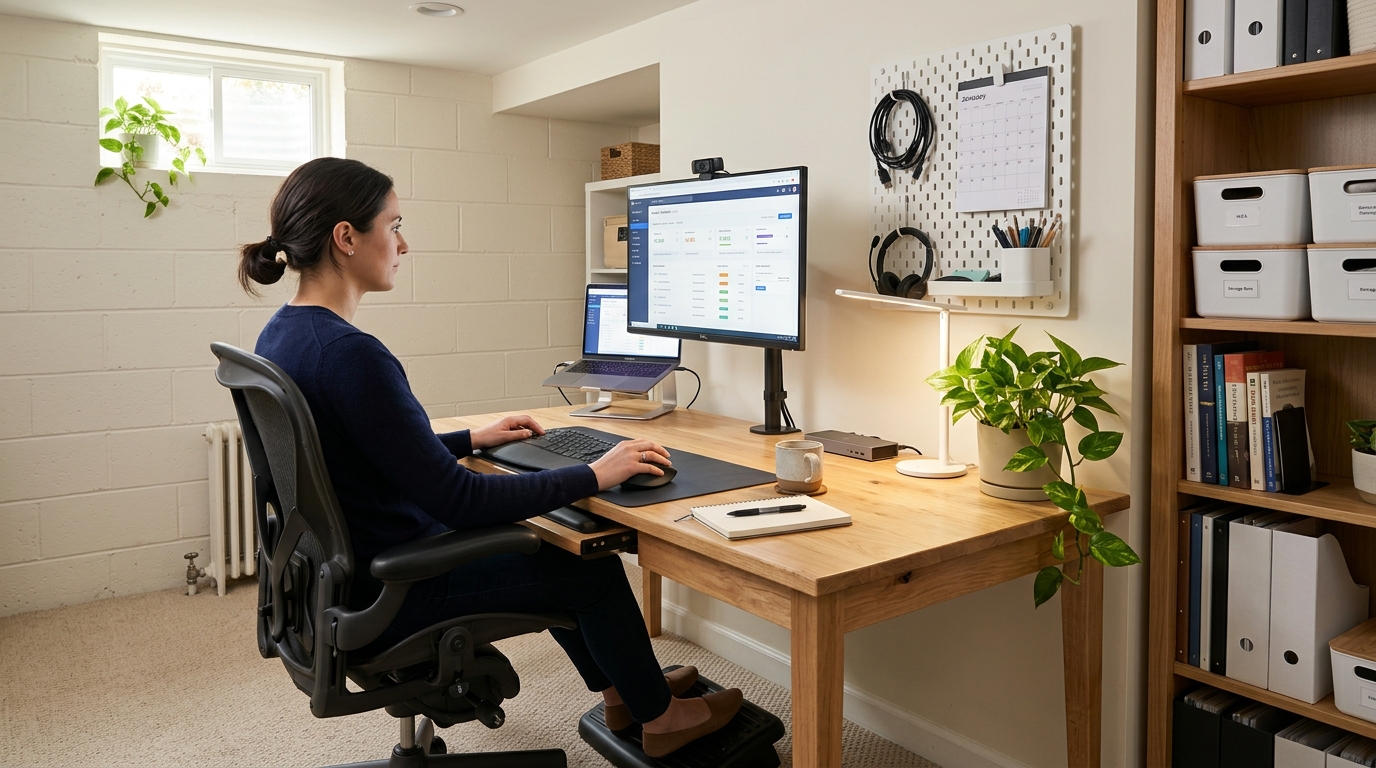
Working in a basement office means you'll be spending significant time in a confined space, so ergonomic design becomes even more important than it might be in a larger, more open home office. Start with your desk and chair setup. Your desk should be at a height where your forearms are parallel to the ground when your hands rest on the keyboard. Your chair should support the natural curve of your spine and allow your feet to rest flat on the floor. Invest in quality pieces here—you'll spend forty or more hours per week in these items, and poor ergonomics lead to back pain, neck strain, and reduced productivity.
Think about your layout in terms of workflow and sightlines. Position your desk so you can see the door without craning your neck, which subconsciously helps you feel less trapped in your basement space. If possible, orient your desk toward your light source rather than away from it. Store frequently used items within arm's reach, but keep your desk surface relatively clear to minimize visual clutter and distractions. A basement office often means limited square footage, so vertical storage solutions like wall-mounted shelves, pegboards, and tall filing cabinets help you maximize the space without creating a cramped feeling.
Climate Control Considerations
Chicago basements can be damp in summer and cold in winter, and getting your basement office to a comfortable temperature year-round requires a strategic approach. In winter, basements are typically the coldest part of the house because heat naturally rises. If your main HVAC system doesn't adequately heat your basement, you have several options: adding zone control to your existing HVAC system, installing a space heater for targeted warmth, or investing in that separate mini-split system mentioned earlier. The advantage of mini-split systems is that they handle both heating and cooling, which makes them ideal for maintaining comfortable conditions in a basement office no matter the season.
Humidity control is equally important, especially in a basement where moisture can be a chronic issue. If you notice dampness in your basement, address the underlying moisture problem before setting up your office. This might involve improving your foundation's drainage, installing a sump pump, or applying waterproofing treatments. Once the moisture issue is managed, a dehumidifier can help maintain ideal humidity levels between forty and fifty percent. If your office space is chilly year-round despite good ventilation and temperature control, don't underestimate the psychological comfort of warm-toned lighting and textiles like rugs and curtains, which make a space feel more inviting.
Technology and Connectivity
Working from your basement means you need to be confident in your internet connectivity, especially if you regularly join video calls or rely on cloud-based applications. Test your WiFi signal strength in your planned office location before committing to the setup. If your basement sits far from your router, consider installing a WiFi extender or access point to boost signal strength. For mission-critical video calls, having a wired ethernet connection directly to your computer is even better. Run network cables during your basement remodel if possible, so you can connect directly to your modem or a smart switch without visible cables running across your office.
Beyond internet, think about power availability. A basement office needs multiple outlets for your computer, monitor, lighting, chargers, and potentially a mini-split HVAC unit or space heater. During a basement remodel, you can plan outlets strategically around your planned desk location and other work zones. If you're setting up in an existing basement without adding new circuits, ensure you have enough available power without overloading existing outlets. A quality power strip with surge protection is a practical interim solution, but a dedicated circuit or additional outlets should be part of any formal basement remodeling project.
Creating a Productive Design Atmosphere
Beyond the technical requirements, your basement office should feel like a place where you want to spend your workday. Color psychology matters—soft, neutral tones like beige, soft gray, and pale blue create a calm, focused environment without feeling depressing. That said, a few accent colors or artwork can prevent the space from feeling sterile or institutional. Plants bring life to a basement space and improve air quality. A small plant stand with low-light tolerant varieties like pothos or snake plants adds visual interest without requiring special care.
Consider how you'll manage the psychological challenge of working underground. Some people find basement spaces cozy and distraction-free, while others feel claustrophobic. If you're in the latter camp, focus on making the space feel as open as possible: use light colors, minimize visual clutter, and ensure adequate lighting. Taking breaks to go upstairs and reset your mental space is perfectly fine. The goal is creating a basement office that works for your work style and personality, not forcing yourself into a space that doesn't feel right.
Working With Professionals
Creating a truly functional basement home office often requires expertise beyond DIY knowledge. If you're adding a basement home office as part of a larger remodeling project, you'll want to work with contractors experienced in basement design. They can address moisture issues, plan HVAC zones, install proper lighting and electrical systems, and ensure your new office meets Chicago building codes. A good basement remodeling contractor understands that basements are fundamentally different from above-grade spaces and will design accordingly.
For layout and design questions, consider consulting with an interior designer or work-from-home space specialist. They can help you plan an efficient layout, select finishes that enhance productivity, and solve spatial challenges unique to basement locations. It's worth investing in professional guidance here because creating an uncomfortable workspace means you're less likely to actually use it effectively. The upfront consultation cost pays for itself in improved productivity and the long-term value of the finished space.
Making Your Basement Office a Reality
A basement home office might seem like a compromise compared to an upstairs den or spare bedroom, but with thoughtful design, it can actually be superior. The quiet, dedicated space eliminates distractions, the consistent temperature and humidity are easier to control, and the separation from household activity creates a clear boundary between work time and family time. Chicago homeowners working remotely increasingly recognize that a finished basement office offers privacy and focus that shared living spaces simply cannot match.
If you're thinking about creating a basement home office and want professional guidance on handling moisture, ventilation, lighting, and electrical planning, Budget Construction Company has completed dozens of basement projects for Chicago homeowners. We understand the specific challenges of basement spaces in this region and can help you create an office environment where you'll actually look forward to working. Contact us for a consultation or request a free estimate to discuss your basement office vision.