
Best Materials for Chicago Small Bathrooms: Humidity, Cold Weather, and Durability Considerations
Chicago weather puts bathroom materials to the test. The same tile that works in Arizona will crack, mold, and fail faster here. Here is how to choose finishes that survive our climate.
Chicago's extreme seasonal swings—subzero winters and humid summers—create specific challenges for bathroom materials that generic design guides never address. The bathroom materials you choose will either weather these cycles beautifully or fail within a few years. If you're remodeling a small bathroom in Chicago, understanding how humidity, freeze-thaw cycles, and moisture affect different materials can mean the difference between a 15-year renovation and one that needs redoing in five.
Why Chicago's Climate Is Harsh on Bathroom Materials
Chicago bathrooms face two relentless enemies: moisture and temperature extremes. Winter temperatures drop below freezing, and your heating system creates dry indoor air that battles summer humidity levels that rival the South. Add lake-effect moisture swings, and you have an environment that breaks down inferior materials quickly. This isn't theoretical—it's something Chicago contractors see year after year in homes where bathrooms fail prematurely because homeowners didn't account for local climate conditions when choosing materials.
Porcelain tile might seem fine in climate-controlled Arizona, but in a Chicago bathroom, poor-quality tile absorbs microscopic amounts of moisture that will eventually cause problems. When the temperature drops below freezing, that absorbed moisture expands and contracts with each cycle, creating hairline cracks in the tile. Those cracks widen over time, trap more moisture, and eventually the tile fails or becomes a mold hazard. The same freeze-thaw dynamic applies to grout, sealants, and even paint. What works perfectly fine in Denver or Dallas will start deteriorating in Chicago within a few years if it's not specifically selected for our climate.
Chicago's older housing stock compounds this challenge significantly. Many homes built in the early 1900s have aging plumbing systems, uninsulated walls, and foundation issues that create constant moisture movement that never homes don't typically encounter. A bathroom material choice that works fine in a modern suburban home with a solid foundation and modern vapor barriers might fail within a few years in a 1920s greystone where moisture migration is a daily reality. This is why understanding your home's specific age and condition matters as much as understanding the materials themselves.
Flooring: Which Materials Hold Up in Chicago
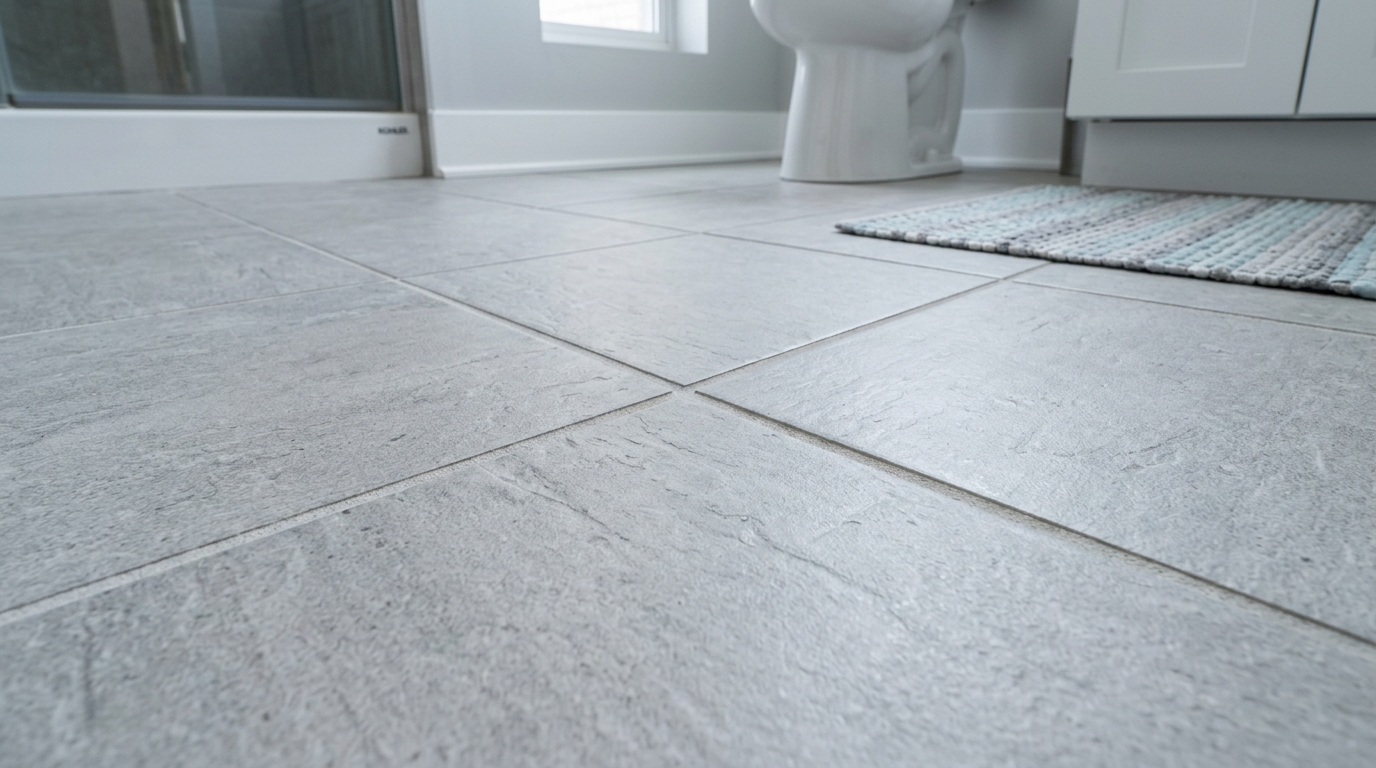
Bathroom flooring in Chicago takes more moisture abuse than almost any other room in your home. Unlike a kitchen where moisture is occasional, a bathroom generates moisture daily through showers, steam, and humidity. Your flooring choice here matters more than anywhere else in the home because water exposure is constant, and Chicago's temperature swings work against inferior materials relentlessly. Getting this decision right means your bathroom floor will last 15+ years. Getting it wrong means you'll be replacing flooring in five to seven years and dealing with mold or structural damage underneath. For a deeper comparison of Chicago flooring options beyond the bathroom, see our guide on choosing durable floors that survive Chicago's climate.
Porcelain Tile: The Gold Standard
Porcelain tile is your best bet for Chicago bathrooms, but not all porcelain is created equal. The key metric is water absorption rate—look for porcelain that absorbs less than 0.5% water by weight. This density specification is what separates true porcelain from cheaper ceramic tile that looks similar but absorbs significantly more moisture. That higher density prevents the freeze-thaw damage that destroys cheaper ceramic tile over Chicago winters and keeps moisture from migrating into the substrate where it causes mold, subfloor rot, and structural problems down the line.
Porcelain holds up through Chicago's temperature swings because it doesn't expand and contract like softer materials do. It resists mold growth, survives the humidity in a steamy shower without degrading, and doesn't deteriorate when exposed to the rapid temperature changes from your heating system running in January or the humidity shifts between seasons. Real estate agents across Chicago consistently note that bathrooms with quality porcelain tile hold their value better than bathrooms with softer flooring materials like vinyl or laminate. When you eventually sell, that tile investment pays dividends.
The catch is that installation quality matters as much as material quality. Your substrate must be solid with no soft spots or movement, and grout and sealant must be applied correctly with the right products for Chicago's climate. A qualified Chicago contractor understands this because we see failed installations regularly. Cheap installation absolutely undermines excellent materials, so don't cut corners on the installation even if you select premium tile.
Luxury Vinyl Plank (LVP): The Practical Alternative
Luxury vinyl plank has genuinely come a long way in the past decade and represents a legitimate middle ground between budget materials and porcelain. Modern waterproof LVP resists moisture significantly better than older vinyl products and costs a fraction of what porcelain tile costs—often 60-70% less when you factor in installation. For small bathrooms where budget is genuinely tight, waterproof LVP is a defensible choice, especially if you're renting, planning to sell within five years, or want an easy maintenance option that looks good.
That said, LVP has real limits in Chicago's climate. It performs poorly in genuinely wet zones right next to the shower where water sits for extended periods and can penetrate seams through repeated exposure. LVP also expands and contracts with humidity swings, which over years can create gaps at edges or buckling that becomes visible and problematic. Over 10-15 years in a humid Chicago bathroom, cheaper LVP brands degrade noticeably, developing soft spots or separating at seams. Higher-quality brands with better moisture barriers and thicker wear layers hold up significantly better, but by the time you're buying premium LVP, you're paying close to what porcelain tile costs, so the budget advantage disappears.
Engineered Hardwood: Not Recommended
Hardwood, whether engineered or solid, doesn't belong in Chicago bathrooms for practical reasons that Chicago's climate makes unavoidable. Even water-resistant engineered hardwood will cup, warp, and harbor mold given our extreme humidity fluctuations and freeze-thaw cycles. The wood substrate simply moves too much when exposed to our seasonal moisture swings, no matter how much sealant or finish you apply. The money you save on materials upfront gets spent on replacement within ten years, plus the cost of dealing with mold or subfloor damage that the failed wood creates. Skip hardwood in bathrooms entirely.
Wall Materials: Tile vs. Paint vs. Alternatives
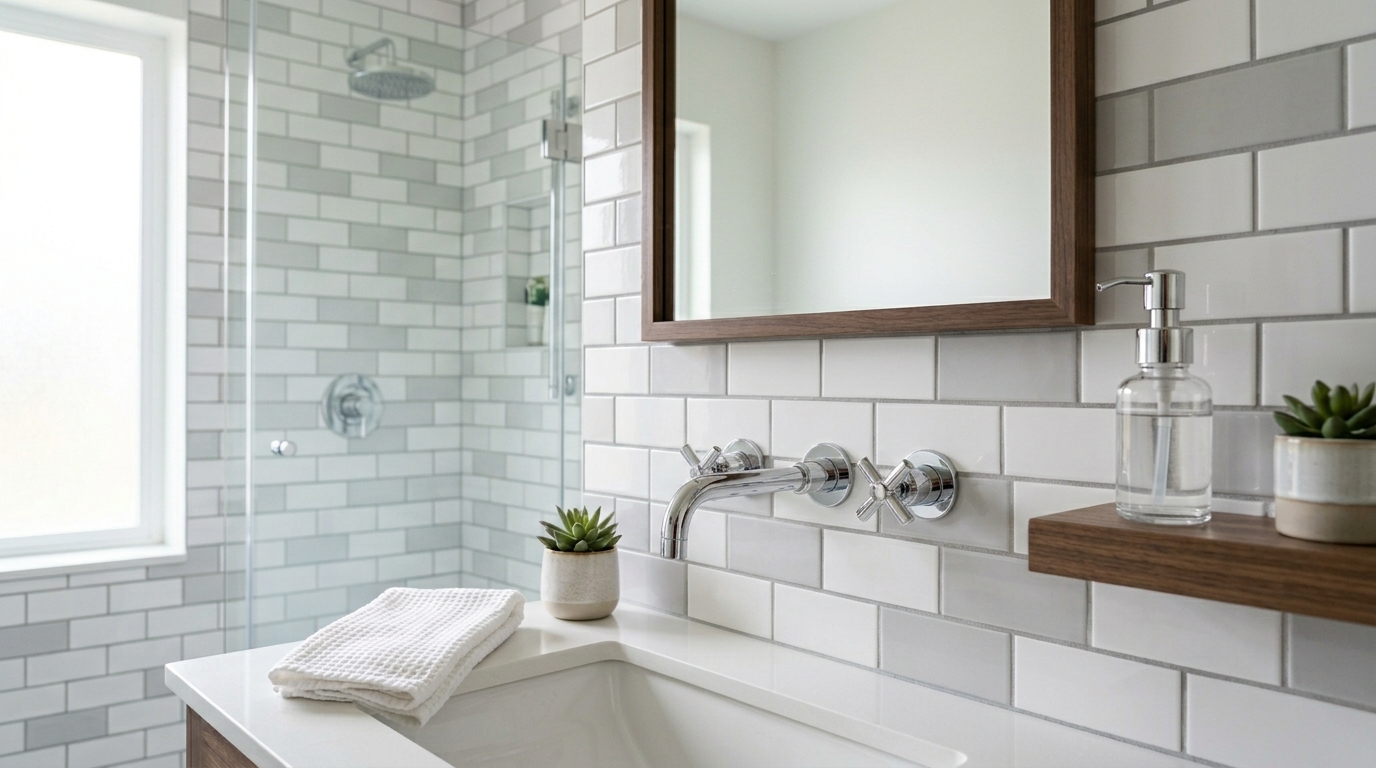
Your wall choice affects moisture control throughout the entire bathroom and influences how long your bathroom will look good before needing updates.
Wall Materials: Tile vs. Paint vs. Alternatives
Your wall choice affects moisture control throughout the bathroom.
Ceramic or Porcelain Tile: Proven Performance
Tile is the safest long-term choice for bathroom walls in Chicago, and it's the choice we recommend most consistently to homeowners planning renovations that will serve them for a decade or longer. Porcelain tile rated specifically for wet areas holds up indefinitely in Chicago's climate with minimal maintenance beyond occasional cleaning. Ceramic tile has lower density than porcelain, making it acceptable on walls away from direct shower spray, but it becomes risky in high-moisture zones right next to the shower where it absorbs water repeatedly and becomes a breeding ground for mold and mildew despite your best cleaning efforts.
The cost objection is legitimate—tile is genuinely more expensive than paint upfront. However, in a small bathroom, the square footage is manageable compared to a kitchen or large master bath, and tile eliminates future moisture problems that would force you to repaint, repair walls, and deal with potential structural damage. If you plan to stay in your home for more than five years, tile on the walls is worth the investment in Chicago because the durability justifies the cost. You won't need wall repairs or repainting within a decade.
Moisture-Resistant Drywall and Paint
Some Chicago homeowners opt for moisture-resistant drywall (often called greenboard) paired with premium bathroom paint formulated for moisture resistance. This approach costs less than tile and genuinely works if your bathroom has good ventilation and you're disciplined about running the exhaust fan for a full 20 minutes after every shower to expel moisture from the space. In reality, most households don't maintain this level of discipline, especially in winter when opening bathroom doors to vent moisture feels uncomfortable. Without that ventilation discipline, moisture accumulates behind the paint, supporting mold growth that you won't see until it's established.
If you decide to go this route rather than tile, select semi-gloss or satin-finish bathroom paint formulated for moisture resistance, absolutely not matte finish which traps humidity and fails faster. Use a moisture barrier product underneath if the drywall isn't greenboard. Even with these precautions, plan realistically to repaint every 5-7 years in Chicago's humid climate. Compare that maintenance cycle to tile, which requires no repainting and outlasts paint by decades.
Shiplap and Beadboard: Beautiful but Risky
Shiplap and beadboard look genuinely charming in small bathrooms and create that cottage or farmhouse aesthetic that appeals to many homeowners. However, Chicago's humidity will eventually compromise these wood-based materials in ways that climate-controlled regions never experience. Wood-based wall materials absorb moisture readily and harbor mold and mildew growth, especially in areas near the shower where humidity is highest and water can splash or steam condense onto the surface. The aesthetic appeal isn't worth the durability problems you'll face within a few years.
If you love the look of shiplap or beadboard and absolutely want to use it, keep these materials confined to areas away from high-moisture zones. Use tile or moisture-resistant wall panels in and around the shower area itself where moisture exposure is constant. This compromise approach lets you have the design you want without setting yourself up for mold and deterioration problems.
Countertops and Vanities: Materials That Survive
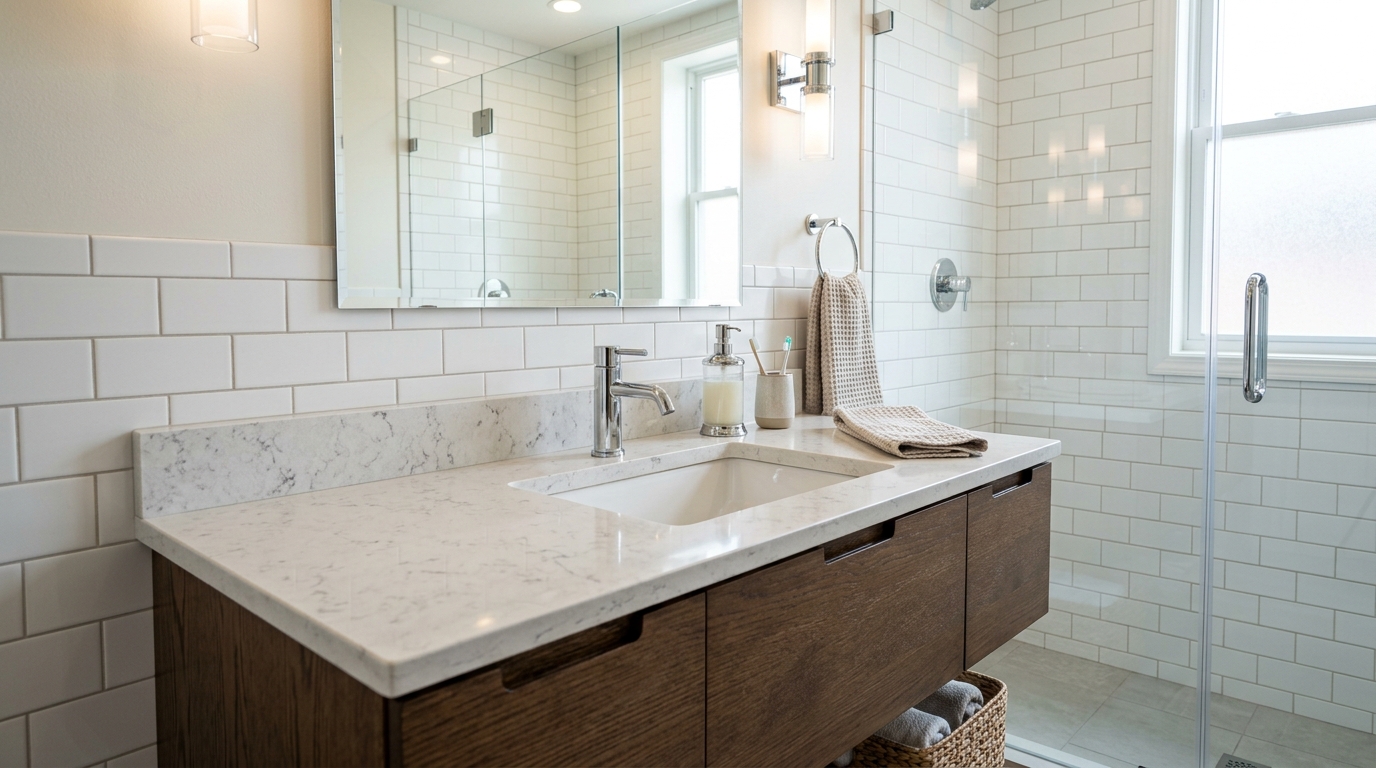
Your vanity and countertop see constant moisture exposure from sink splash, running water, and the high humidity that a bathroom generates daily. The material you choose here determines whether your vanity looks fresh and clean in fifteen years or becomes stained, warped, and discolored within a few years. Unlike kitchen countertops where occasional water contact is the norm, bathroom vanities exist in a genuinely wet environment that demands materials specifically suited to that exposure.
Quartz: Low-Maintenance, Durable
Quartz is engineered stone composed of ground quartz minerals mixed with resin binders and pigments. The key advantage is that it's completely non-porous, which means it doesn't absorb moisture, bacteria, or soap residue into its structure like porous materials do. Quartz resists etching from acidic cleaners and staining from products you actually use in bathrooms, and it survives Chicago's temperature swings without cracking or shifting. It requires absolutely no sealing, making maintenance as simple as wiping down with mild soap and water. Quartz is admittedly more expensive than cultured marble, but it costs significantly less than natural marble and dramatically outperforms marble in Chicago bathrooms. If you can afford it, quartz is worth the investment because you'll never need to reseal it or deal with staining problems. For specific pricing on bathroom materials and installation costs, check our 2026 Chicago flooring cost breakdown.
Cultured Marble: Budget-Friendly with Caveats
Cultured marble is a polyester resin mixed with crushed marble aggregate, engineered to look similar to real marble at a fraction of the cost. For tight budgets, cultured marble makes sense initially. The downside is real and worth understanding before you commit. Cultured marble can yellow with UV exposure over time, it's inherently less durable than quartz, and it requires periodic sealing to prevent staining and absorption of bathroom products. In a bathroom with good lighting and proper ventilation, cultured marble performs adequately in Chicago, but it's not a long-term solution. Plan realistically to replace it in 10-12 years. If you're staying in your home longer than that, the math favors upgrading to quartz when the budget allows.
Natural Stone (Marble, Granite, Limestone): High Maintenance in Chicago
Natural stone is undeniably beautiful and it's expensive, which creates a temptation to cut costs elsewhere. Here's the reality in Chicago: marble and limestone are porous stones that etch easily when exposed to acidic products like soap residue, toothpaste, and common bathroom cleaners. Granite is harder than marble but still requires regular sealing in our humid Chicago environment, and even sealed granite needs ongoing maintenance to preserve its appearance. These materials demand significant maintenance commitment and look weathered much faster in our climate than they do in drier regions. Unless your maintenance budget is genuinely unconstrained and you're committed to sealing and careful cleaning, skip natural stone in bathrooms. The aesthetic pleasure won't compensate for the maintenance headaches in Chicago.
Solid Surface Materials: Seamless and Practical
Solid surface countertops like Corian are acrylic or polyester-based engineered materials that offer truly seamless surfaces without visible seams where bacteria and water can hide. They're non-porous, extremely easy to clean with standard bathroom cleaners, and minor repairs are simple for professionals to handle. For small bathrooms, solid surface provides practical durability and a clean, modern look at mid-range cost between cultured marble and quartz. In Chicago's moisture environment, solid surface outperforms cultured marble significantly and provides durable service that quartz provides, but at lower cost if budget is a constraint. It's an underrated option that more homeowners should consider.
Fixtures and Hardware: Finishes That Won't Corrode
Chicago's humidity and temperature swings attack metal finishes aggressively.
Stainless Steel and Chrome: Reliable Choices
Stainless steel and chrome resist corrosion and humidity. They're standard in Chicago bathrooms for good reason. Avoid brass or bronze finishes unless you're willing to maintain them obsessively—Chicago's humidity tarnishes these quickly.
Faucet Cartridges and Valves
Buy quality faucets with ceramic disk cartridges, not rubber washers. Rubber washers fail faster in Chicago's humidity, and replacing them requires calls to a plumber. Ceramic disks last twice as long and resist mineral buildup from our water.
Paint and Sealants: The Overlooked Variables
Bathroom paint matters more in Chicago than most homeowners realize.
Use bathroom-specific paint labeled for moisture resistance. Look for mildew-inhibiting additives and semi-gloss or satin finishes that shed moisture better than matte. Fresh paint every 5-7 years in a well-ventilated bathroom is realistic for Chicago homes. If your bathroom has poor ventilation, plan to repaint more frequently.
Caulk and sealants around tile and fixtures are critical. Use silicone caulk, not acrylic or acrylic-latex caulks, which absorb moisture and break down in Chicago's humidity. Silicone lasts 10 years or more and resists mold growth better.
Ventilation: The Overlooked Essential
No material choice compensates for poor ventilation. A bathroom exhaust fan that vents outside (not into your attic) is essential in Chicago. Run it during every shower and for 20 minutes after. Without it, even porcelain and quartz can't prevent mold growth and moisture damage.
Kitchens and bathrooms with exhaust fans that vent inside the attic or walls create hidden moisture problems. Ensure your contractor vents your new exhaust to the outside.
Putting It Together: A Realistic Chicago Bathroom
The most durable small bathroom renovation in Chicago pairs high-quality porcelain tile flooring (rated at less than 0.5% water absorption) with porcelain or ceramic tile in the shower and upper walls, moisture-resistant drywall with premium bathroom paint in lower walls, a quartz or solid surface countertop, stainless or chrome fixtures, and a properly vented exhaust fan that directs moisture outside. This specific combination costs more upfront than budget materials, but it survives 15+ years or longer in Chicago's harsh climate without requiring emergency repairs. You won't face rotted subfloors, cracked tile, mold damage, or moisture intrusion problems before your renovation is long since paid off. The materials work together to manage moisture effectively while resisting the freeze-thaw cycles and humidity swings that define Chicago winters and summers.
Cheaper material combinations—low-grade porcelain, engineered hardwood, cultured marble, budget vinyl—might seem reasonable initially because of lower upfront costs. In a Chicago bathroom, these combinations fail predictably, cost you in repairs and remediation, and require complete redoing within five to ten years. Chicago homeowners who've skimped on bathroom materials to save money upfront consistently express regret when they're facing rotted subfloors, extensive mold remediation, or complete redo work ten years later. The cost of redoing a bathroom is significantly higher than the cost of doing it right the first time with quality materials.
Next Steps
If you're planning a small bathroom remodeling in Chicago, material selection is where you make critical decisions that either serve your home durably for decades or haunt you with problems in a few years. The material choices aren't just about aesthetics—they're structural decisions that determine whether your bathroom survives Chicago's climate successfully or deteriorates prematurely. Work with a contractor who understands Chicago's specific climate challenges and can source materials specifically engineered for our temperature extremes and humidity swings, rather than generic materials that might work fine in other climates.
Budget Construction has completed hundreds of bathroom renovations across Chicago and the surrounding suburbs, and we understand exactly which materials perform reliably in our climate and which ones fail. We know which contractors install correctly, which sealants and grout hold up under our conditions, and how to ventilate bathrooms so moisture problems never start. If you're ready to discuss a small bathroom renovation in your Chicago home and want guidance on material selection that will actually survive Chicago winters and summers, we're happy to help you plan a bathroom that serves your family for decades. Contact us today for a free consultation and estimate at https://budgetconstructioncompany.com/, or give us a call to discuss your project. We'll walk you through the material options that make sense for your specific bathroom, your budget, and your home's age and condition.