
Chicago Basement Moisture Solutions: Remodeling Strategies for Historic Homes and Lake-Front Properties

Chicago's unique climate and geography create basement moisture problems that standard solutions miss. Here is what actually works.
Chicago's basement moisture challenges are specific to our geography and climate in ways that homeowners and contractors unfamiliar with Chicago often underestimate. Lake Michigan's influence creates humidity levels and weather patterns different from inland climates. Older housing stock in neighborhoods like Lakeview, Rogers Park, and Evanston has aging foundation systems not designed with modern moisture management standards. Groundwater conditions vary dramatically across Chicago depending on proximity to the lake, elevation, and soil composition. A basement moisture solution that works perfectly in Milwaukee or St. Louis might fail completely in Chicago because the climate and geology are fundamentally different. Understanding Chicago's specific moisture challenges before you start a basement remodeling project is critical because moisture problems discovered mid-renovation are expensive to fix and can derail your entire project. This guide addresses Chicago-specific basement moisture issues, helping you assess your moisture situation and implement solutions that actually work in our climate.
Chicago's Lake-Effect Humidity Challenge
Lake Michigan's proximity creates humidity levels and moisture patterns unique to Chicago. In summer, the lake moderates temperature but increases humidity to levels comparable to subtropical regions. In winter, lake-effect snow contributes to ground saturation. Spring and fall freeze-thaw cycles create constant moisture movement through soil and foundations. This lake-effect environment is fundamentally different from inland climates with lower humidity and more stable soil moisture patterns.
Basements in Lakeview, along the Gold Coast, and in other lakefront areas experience more pronounced lake-effect moisture than inland neighborhoods. Ground saturation from heavy rain or spring snowmelt persists longer near the lake. Humidity levels stay higher year-round. Homeowners in these lakefront areas frequently discover moisture problems that standard waterproofing solutions don't adequately address because solutions designed for drier climates underestimate Chicago's moisture intensity.
Even inland Chicago neighborhoods experience significant humidity swings. The combination of winter heating creating dry indoor air and seasonal humidity extremes creates moisture stress on foundations and basement walls that dry climates simply don't experience. Understanding that your basement's moisture challenges are intense by national standards helps you approach solutions appropriately.
Aging Foundation Systems in Historic Neighborhoods
Historic Chicago homes in neighborhoods like Portage Park, Lincoln Square, and Rogers Park have basements built with materials and techniques that predate modern moisture management. Brick or fieldstone foundations were common in the early 1900s. These materials are porous and don't include the modern vapor barriers and sealants that contemporary construction uses. Mortar in old foundations deteriorates over a century, creating pathways for water and moisture to enter basements.
Many older basements have no interior or exterior waterproofing. Foundations were built assuming that adequate grading and drainage would manage moisture, but Chicago's water table and groundwater conditions often defeat this assumption. Historic homes also frequently have compromised exterior drainage—gutters and downspouts that have failed, grading that has shifted over time, or exterior conditions that direct water toward the foundation.
Assessing the condition of your historic basement's foundation is critical before renovation. You might discover that your dry-looking basement is staying dry only because of luck or because you haven't had heavy rain recently. A proper assessment with moisture testing reveals actual moisture conditions and guides solutions.
Moisture Assessment Before Renovation
Before you invest in basement remodeling, assess your moisture situation thoroughly. Don't assume your basement is dry just because it looks dry. Concrete and masonry can wick moisture invisibly. Basements that stay dry in normal years might have hidden moisture that heavy rain or high water table conditions expose.
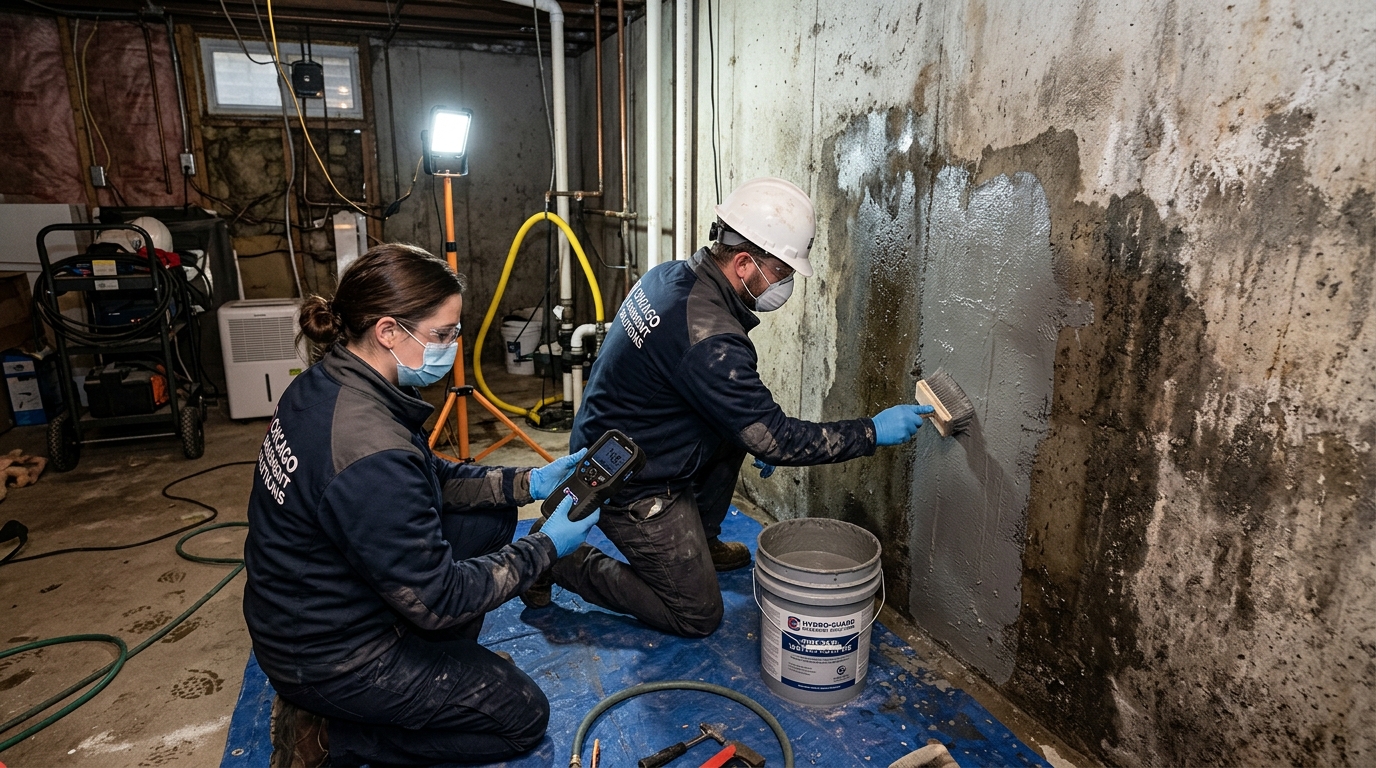
Professional moisture assessment uses moisture meters, hygrometers, and sometimes calcium chloride testing to quantify actual moisture in concrete and masonry. These tests reveal whether your basement has active moisture problems or whether visible moisture is seasonal and manageable. Assessment costs $300-800 but provides critical information that guides your entire renovation approach.
Moisture assessment should also evaluate your drainage situation. Is water actively entering your basement during heavy rain? Do you have sump pump activity? Is your grading adequate? Does water accumulate around your foundation? These observations guide whether you need interior or exterior waterproofing approaches.
Interior Waterproofing Solutions
Interior waterproofing manages moisture that's already in your basement, rather than preventing it from entering. Interior approaches include sump pumps, interior drain systems, dehumidifiers, and vapor barriers. These solutions work best in basements with moderate moisture where exterior waterproofing isn't feasible or necessary.
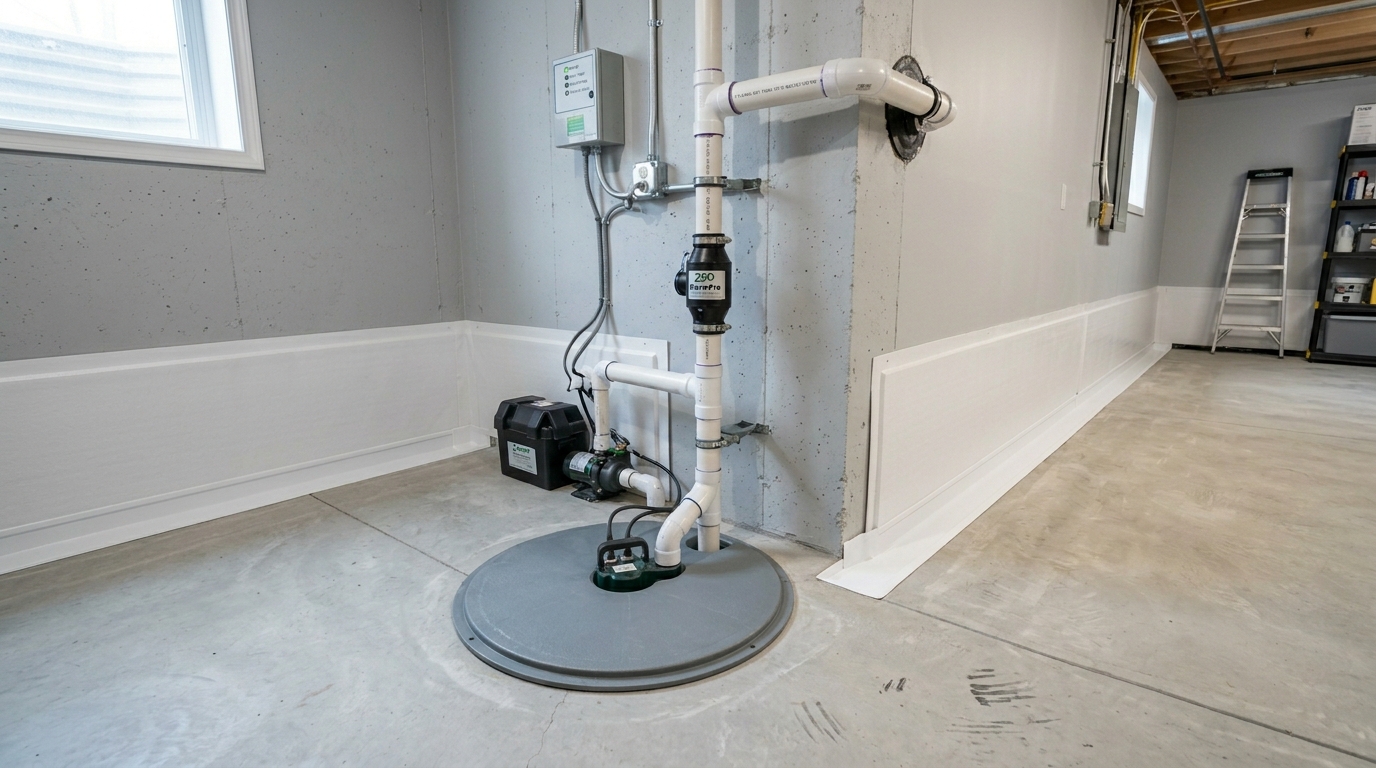
Interior sump pump systems collect water from interior drains at the lowest point of your basement and pump it away from the foundation. A properly installed sump system can manage significant groundwater or seepage without requiring exterior excavation. Sump pump systems cost $2,000-4,000 installed and are essential in many Chicago basements.
Interior drain systems installed around the perimeter of your basement collect water and route it to the sump pump. These systems sit on top of the foundation footing inside your basement. Installation requires removing flooring around the perimeter and is more invasive than sump pump installation alone but effectively manages water entering from the foundation.
Vapor barriers on basement floors and walls seal porous materials and reduce moisture vapor transmission. Quality vapor barriers cost $500-1,500 for typical basements. They're essential under any finished basement flooring to prevent moisture from rising through materials.
Dehumidifiers help manage humidity in basements with moisture but not active water entry. Industrial dehumidifiers sized for your basement's square footage control humidity to livable levels. Running costs are significant—$20-50 monthly depending on usage—but they keep basement air comfortable and prevent condensation problems.
Exterior Waterproofing Solutions
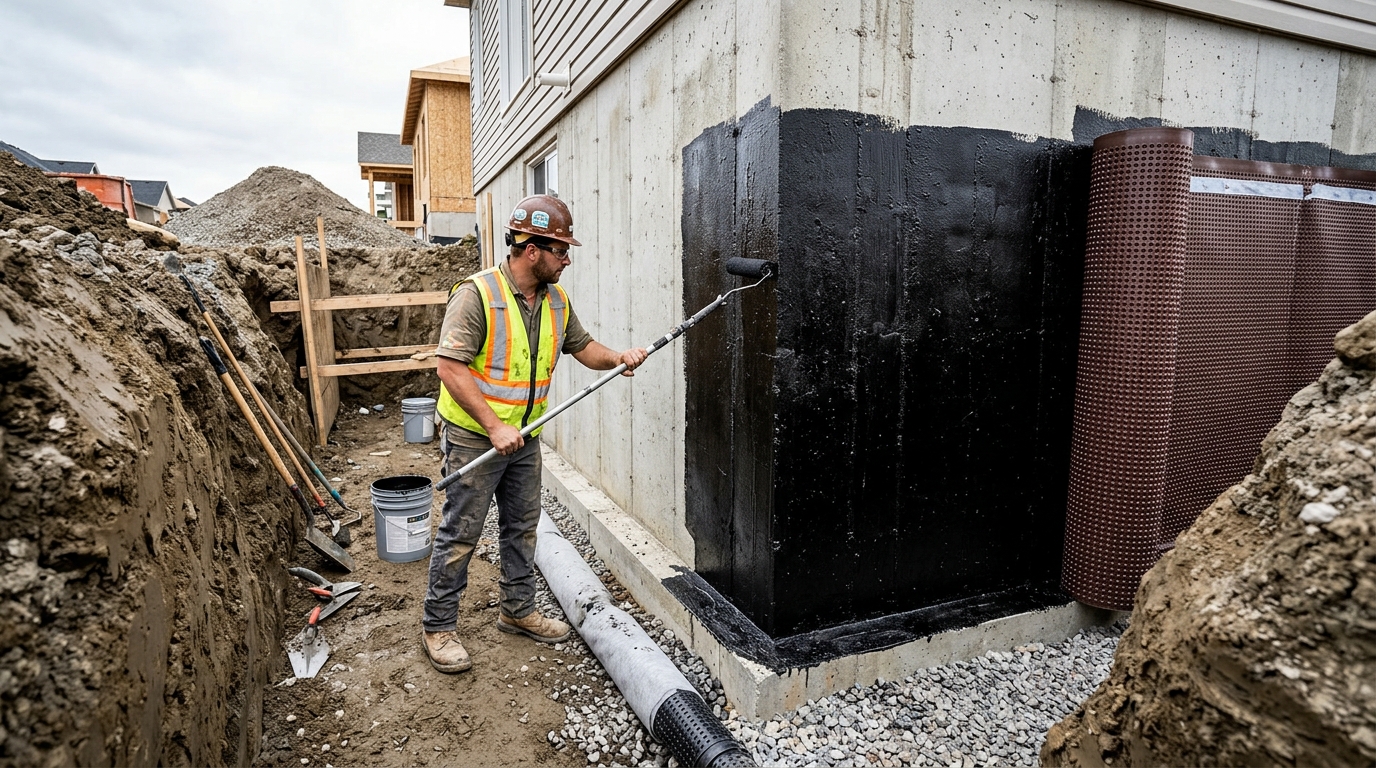
Exterior waterproofing prevents water from entering your foundation, rather than managing it after entry. Exterior approaches include foundation excavation and sealing, exterior drain systems, grading improvements, and gutter/downspout upgrades. Exterior solutions are more expensive than interior approaches but are often more effective long-term, particularly in basements with serious moisture problems.
Exterior foundation sealing involves excavating around your foundation to access the exterior walls, cleaning the masonry, and applying waterproof sealant or coating. This approach directly addresses water entering from outside. Cost ranges from $3,000-10,000+ depending on your foundation's extent and condition. It's expensive but highly effective in stopping water entry.
Exterior drain systems installed at the foundation footing level collect groundwater and route it away from your foundation. These systems work with or instead of interior drains. Installing exterior drains requires foundation excavation. Cost ranges from $2,000-8,000 depending on foundation length and depth.
Grading improvements—resloping ground to direct water away from your foundation—are often overlooked but essential. Water should slope away from foundations at minimum 1-inch drop per foot for 5-6 feet minimum. Poor grading drives water toward foundations, defeating other waterproofing efforts. Grading work costs $500-2,000 depending on your site and how much earth movement is needed.
Gutter and downspout upgrades ensure that roof water is directed well away from your foundation rather than concentrated near it. Installing or repairing gutters, extending downspouts to at least 4-6 feet from foundation, and ensuring proper slope costs $1,000-3,000 but prevents massive amounts of water from hitting your foundation.
Hybrid Approaches: Interior Plus Exterior
Many Chicago basements benefit from combining interior and exterior approaches. A sump pump system with interior drains manages water entering from below while exterior grading and gutter improvements reduce how much water reaches the foundation. This hybrid approach is often more cost-effective long-term than choosing interior or exterior alone.
Discussion with a moisture professional helps determine the right combination for your specific basement. Some basements need aggressive interior management because exterior solutions aren't feasible. Others need comprehensive exterior work because interior solutions would be overwhelmed. Most benefit from both approaches working together.
Moisture Solutions for Historic Home Basements
Historic home basements in neighborhoods like Rogers Park and Lincoln Square present specific challenges because aging foundations are more porous and harder to seal. Modern waterproofing works on these foundations, but expectations should be appropriate—you're protecting against serious moisture problems, not eliminating all moisture vapor that brick or stone naturally transmits.
Historic homes often have basement walls in poor condition—deteriorated mortar, crumbling bricks, previous water damage. Assessing whether foundation repair is needed before waterproofing is important. Extensive foundation work might be necessary before waterproofing is effective.
Historic basements sometimes have existing water damage or previous failed repair attempts. Understanding what's been tried before and why it failed helps guide new approaches. Some older waterproofing materials or sealants used decades ago have deteriorated and might be contributing to current problems.
Moisture Control During Basement Renovation
Even basements without serious moisture problems benefit from moisture management during renovation. Concrete and masonry will release moisture vapor during and after construction. Installing a proper vapor barrier before flooring prevents this moisture from causing problems. Managing humidity with temporary dehumidifiers during construction drying phase accelerates the drying process.
Don't install finished flooring immediately after concrete work. Allow adequate curing and drying time. Moisture locked under new flooring creates mold and damage problems. Professional moisture testing before installing final flooring confirms that your concrete has dried adequately.
Preventing Moisture Problems During Basement Renovation
The best moisture solution is preventing problems before renovation rather than fixing problems afterward. Assess moisture thoroughly before committing to renovation. Address serious moisture problems before finished basement work. Install proper moisture management—sump pumps, vapor barriers, dehumidifiers—as part of your remodeling work.
Budget realistic moisture management costs as part of your basement renovation budget. Don't view moisture solutions as optional extras. In Chicago, moisture management is as essential as framing and electrical work. Basements finished without adequate moisture management fail within years.
Next Steps for Moisture-Conscious Basement Planning
Before planning basement renovation, hire a moisture assessment professional to evaluate your basement's actual moisture conditions. Get detailed recommendations for which waterproofing approaches make sense for your situation. Understand whether interior management, exterior work, or hybrid approaches best address your specific moisture challenges. Budget moisture management as an integral part of your renovation, not an optional add-on.
Budget Construction has managed basement moisture in countless Chicago projects. We understand how lake-effect humidity and aging foundations create specific challenges. We know which approaches work for different Chicago neighborhoods and situations. If you're planning a basement remodeling and want guidance on assessing and managing moisture properly, visit https://budgetconstructioncompany.com/ to schedule a consultation. We'll assess your basement's moisture situation, recommend appropriate solutions, and ensure that your renovation includes proper moisture management so your finished basement stays dry and functional for decades.