
Do You Need a Permit to Finish Your Basement in Chicago? A Suburban Permit Guide for Homeowners

Skipping the permit process can cost you thousands in fines and complications when selling. Here is exactly what Chicago-area municipalities require.
Chicago homeowners planning basement remodeling frequently ask whether permits are actually necessary. Can you finish a basement without permits? Technically, yes—but it's a terrible idea with serious consequences. Unpermitted basement work creates liability, potential code violations, complications when selling, and fines if discovered. Chicago's city and suburban municipalities all require permits for basement finishing because basements involve building code compliance for safety and livability. Understanding what permits you actually need and why helps you make informed decisions about your basement renovation. This guide walks through Chicago and suburban basement permit requirements, helping you understand what's required, what it costs, and what happens if you skip the permitting process.
What Requires a Basement Permit in Chicago
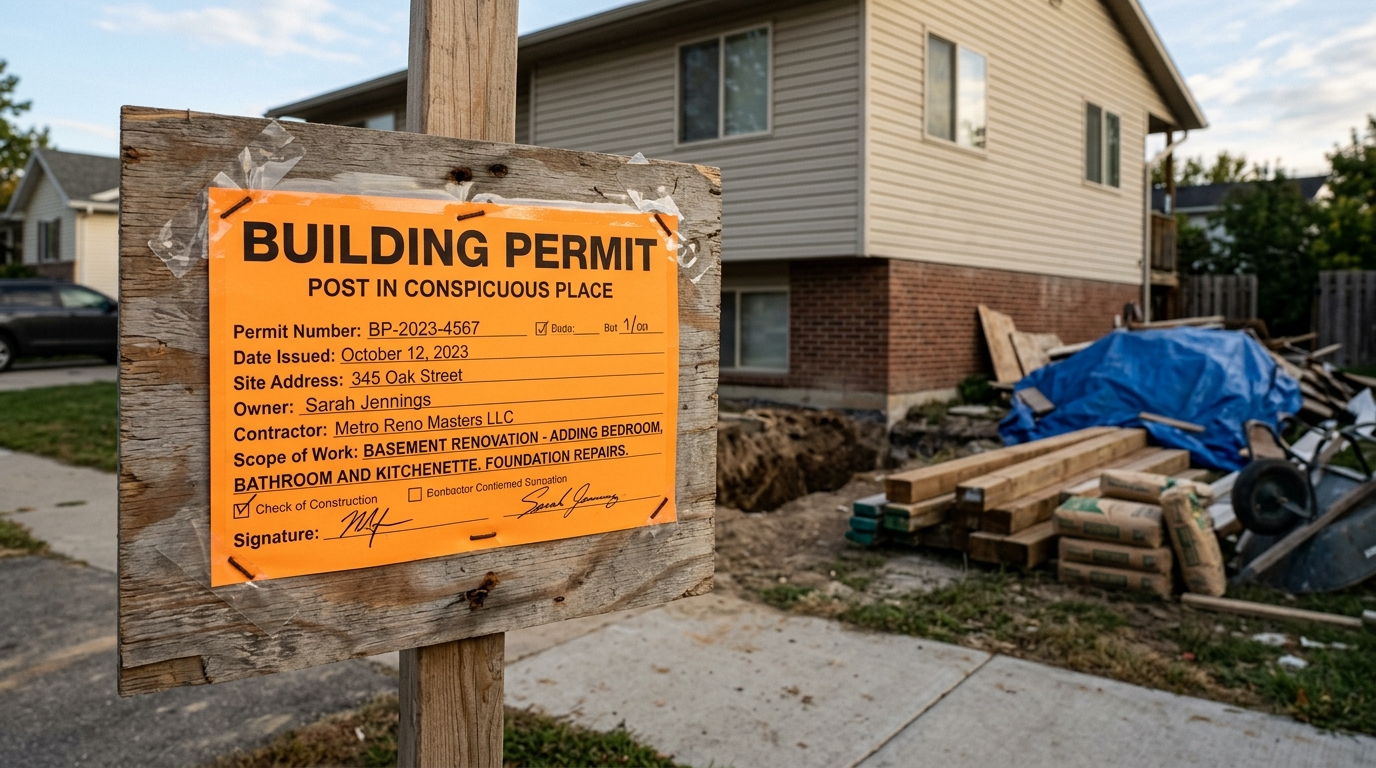
Chicago requires permits for basement finishing work involving structural changes, electrical work, plumbing modifications, or work that affects egress (emergency exits). If you're finishing a basement with drywall, flooring, lighting, and electrical outlets, you need a building permit. If you're adding a bedroom with an egress window, you need additional permits beyond basic finishing. If you're adding plumbing for a bathroom, you need plumbing permits.
The only basement finishing that might not require permits is purely cosmetic work—painting, trim installation, or furnishings that don't involve construction or system modifications. But true basement finishing involving walls, ceilings, flooring, or systems requires permits. Don't assume your specific project doesn't need permits—check with your municipality before starting work.
Permits exist because building codes require specific things in basements: adequate egress for bedrooms, proper ceiling height (7.5 feet minimum for at least 50% of the room), ventilation requirements, electrical safety, plumbing compliance, and moisture management. These requirements exist for safety and livability. Building permits ensure that finished basements meet code requirements rather than creating hazardous or unmortgageable spaces.
Chicago Building Department Basement Permits
Chicago's building department requires permits for basement finishing. The permit application includes plans showing your proposed layout, electrical design, plumbing (if any), mechanical work (if any), and details about egress. Plan requirements vary based on scope—a simple family room requires less documentation than a bedroom with bathroom.
Chicago building department charges permit fees based on estimated construction cost. A typical basement renovation fee might be $200-600 depending on scope. These fees seem minimal compared to your total project cost, but they're mandatory. You can't get a building permit without paying the fee.
Chicago's permit timeline is typically four to six weeks from application through approval. Your plans are reviewed for code compliance, and inspectors might request modifications if plans don't meet code. Plan review can be faster or slower depending on reviewer workload and whether your plans require modifications.
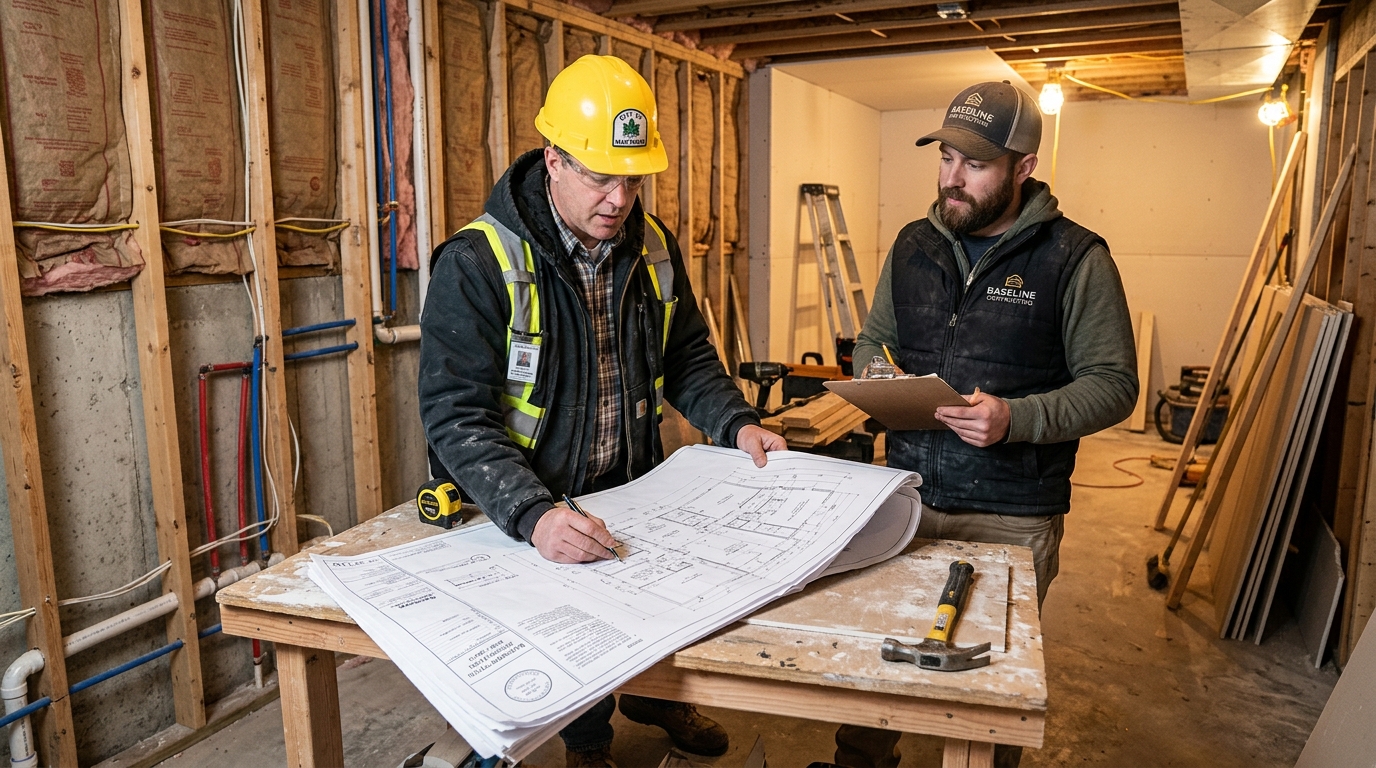
Inspections occur during construction: rough-in inspection for electrical and mechanical work, and final inspection after completion. Building inspectors verify that work meets code before approving your completed project.
Suburban Permit Requirements
Suburban municipalities around Chicago have varying basement permit requirements. Some suburbs adopt Chicago's code and requirements, while others use different standards or have stricter requirements. Understanding your specific suburb's requirements is essential because assuming suburban requirements match Chicago's assumption is often wrong.
Evanston: Requires permits for basement finishing. Evanston's code is based on Illinois Building Code with Evanston modifications. Evanston is particularly strict about egress requirements for bedrooms—you must have two means of egress, which limits bedroom possibilities in many basements. Evanston permit costs and timelines are comparable to Chicago's.
Oak Park: Requires permits for basement finishing with design review for some projects because of historic district designation. Oak Park's permit process can be slower because of preservation considerations. Plan for six to eight weeks for permits in Oak Park.
Skokie: Requires permits for basement finishing. Skokie's requirements are less restrictive than Chicago or Evanston. Skokie permits typically process faster than Chicago's—three to four weeks.
Wilmette: Requires permits with additional considerations for proximity to water (Wilmette's lakefront location affects code requirements). Permit requirements are comparable to Evanston's—fairly strict.
Rogers Park: Within Chicago, Rogers Park follows Chicago's permit requirements and timelines.
Basement Permit Costs
Permit fees vary by municipality and estimated construction cost. Chicago charges approximately $0.05-$0.10 per estimated construction dollar. A $30,000 basement project budgets $1,500-3,000 in permit fees. These fees seem high but are standard across municipalities.
Beyond permit fees, plan review and modifications sometimes incur additional costs. If initial plans don't meet code and require revision, you might need to pay the architect or designer to modify plans for resubmission. Plan for $500-2,000 in potential revision costs depending on initial plan quality.
Inspection fees are sometimes separate from permit fees. Some municipalities include inspection fees in permit cost, while others charge separately—$100-300 per inspection. Budget for potential inspection costs when planning your project.
Why Skipping Permits Is a Bad Idea
Skipping permits to save costs creates serious problems that cost far more than permit fees would cost. If you finish a basement without permits and later sell your home, buyers' lenders require disclosure of unpermitted work. Lenders won't finance properties with unpermitted work—it's liability they won't accept. You must either permit the work retroactively (expensive and complicated) or reduce your sale price to account for the unpermitted work. The cost of unpermitted work discovered at sale time is typically 20-40% of the work's value.
If unpermitted basement work is discovered before sale, building department fines can be substantial. Violations discovered during sale or discovery proceedings can result in fines of $500-2,000+ per violation, plus orders to repair any non-compliant work. Legal fees defending violations add additional cost.
Insurance complications arise when unpermitted work causes damage or injury. If someone is injured in an unpermitted basement space or if unpermitted electrical work causes a fire, insurance might deny claims because the work was done without permits.
Code compliance issues matter for safety. A basement bedroom without proper egress creates a fire hazard. Electrical work done wrong creates fire and shock hazards. Plumbing work done incorrectly can cause water damage or health hazards. Building permits ensure these safety issues are addressed.
Retroactive Permitting
If you've done unpermitted basement work already, you can apply for retroactive permits in most cases. Retroactive permitting involves having your work inspected to verify code compliance, fixing any non-compliant work, then paying permit fees. Retroactive permitting costs more than doing it right initially because of inspection time and potential corrections needed. But it's better than leaving unpermitted work undiscovered.
Timeline Planning with Permits
Budget realistic permit timeline as part of your project planning. A typical basement project timeline is eight to twelve weeks from permit application through completion. This includes four to six weeks for permitting plus four to eight weeks for construction. If design review is required (historic districts, specific municipalities), add two to four weeks.
Delaying permit application delays your entire project. If you want your basement finished by a specific date, you need to start the permit process four to six weeks before you want construction to begin.
Avoiding Permit Delays
Common mistakes that slow permit processing: incomplete applications (missing documentation, unclear plans), plans that don't meet code (requiring revisions), and late inspection scheduling (causing inspector backlog). Avoiding these mistakes keeps your project on timeline.
Working with contractors experienced in your municipality helps avoid delays. They know what documentation is required, what code requirements are specific to your area, and how to schedule inspections efficiently. A contractor used to the specific building department gets through the permit process faster than one unfamiliar with your municipality's requirements.
Getting Accurate Permit Information
Permit requirements vary by municipality, and I've provided general guidance rather than specific requirements for your situation. Before planning your basement remodeling, contact your specific municipality's building department and ask:
- What permits are required for basement finishing?
- What are permit fees and timeline for approval?
- What documentation must be submitted with permit applications?
- What inspections are required during and after construction?
- Are there any specific code requirements I should know about (egress, ceiling height, ventilation)?
Having specific answers from your municipality ensures you understand what you're actually required to do. Your contractor should also provide guidance, but getting information directly from your municipality eliminates confusion.
Next Steps Before Basement Renovation
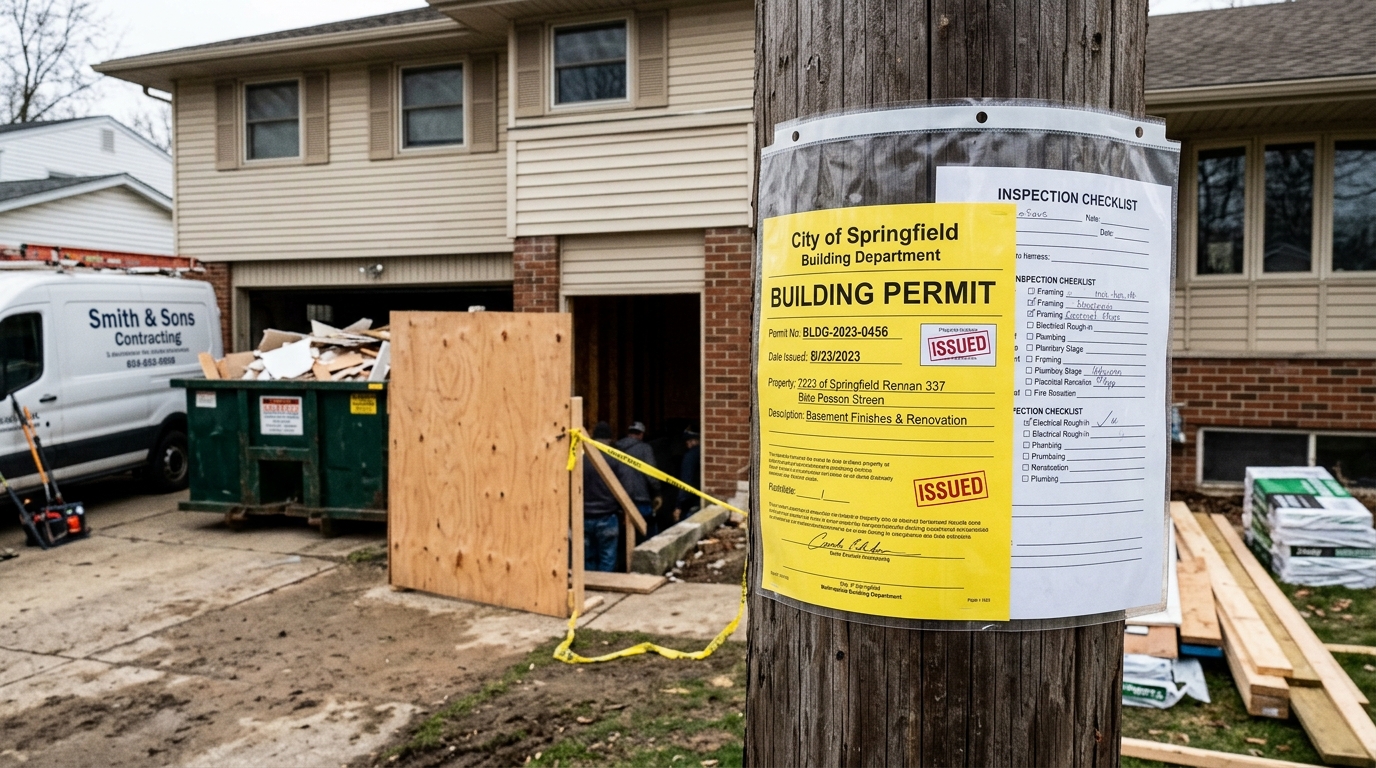
Contact your municipality's building department before planning your basement project. Understand what permits are required and what the timeline and costs are. Plan your renovation timeline accounting for permit processing. Work with contractors experienced in your specific municipality who know permit requirements and can guide your project through the process efficiently.
Budget Construction handles basement permitting throughout Chicago and surrounding suburbs. We know the requirements in different municipalities and manage the permit process so homeowners don't have to. If you're planning a basement remodeling and want guidance on permits required in your specific location, visit https://budgetconstructioncompany.com/ to schedule a consultation. We'll explain what permits you'll need, what the timeline and costs are, and manage permitting as part of your overall project.