
Chicago Climate Flooring Guide: Choosing High-Traffic Floors That Survive Lake Michigan Winters and Humid Summers
Your flooring choice in Lincoln Park or Evanston needs to handle sub-zero January mornings and sticky August afternoons. Here's what actually works.
Chicago's climate is harsh on flooring in ways that homeowners moving from other regions don't anticipate. The same hardwood floor that performs beautifully in Denver will buckle and warp in Chicago within a few years. Tile that works perfectly fine in Arizona's dry climate will crack from freeze-thaw cycles in our winters. Even vinyl that holds up well in temperate climates will expand and contract noticeably in our seasonal extremes. This guide addresses the unique flooring challenges created by Lake Michigan's influence, our brutal winters, and our humid summers, helping you make choices that actually survive Chicago's climate rather than fail prematurely. When you understand how Chicago's weather affects flooring performance, you can select materials that will look good and function properly for 15+ years instead of needing replacement or repair within five.
Understanding Chicago's Unique Flooring Challenges
Chicago's climate creates three specific flooring problems that homeowners in other regions rarely encounter. First, our winter temperatures drop well below freezing, reaching negative 10 or 20 degrees on the worst days. This extreme cold affects materials differently than regions that rarely freeze—it causes expansion and contraction cycles that softer materials can't handle. Second, our humidity levels swing dramatically between seasons. Lake Michigan moderates our summer temperatures but increases humidity during the warm months, while our winter heating creates extremely dry indoor air that pulls moisture from porous materials. These humidity extremes cause different movement patterns than steady-state climates. Third, our freeze-thaw cycling is brutal—materials get wet, freeze, thaw, get wet again, and freeze again in seemingly endless cycles during spring and fall.
Most national flooring guides ignore these Chicago-specific challenges and provide generic recommendations that work fine in Denver, Phoenix, or Atlanta. Those climates don't have Lake Michigan humidity or freeze-thaw cycles that break down inferior flooring. In Chicago, you need to think specifically about how each flooring choice will respond to our actual weather patterns and climate cycles. A material that's rated as "durable" in a national guide might be a disaster in Chicago simply because the climate here is fundamentally different. This is why Chicago contractors and real estate professionals have specific flooring preferences that differ significantly from national trends.
Porcelain Tile: The Proven Performer
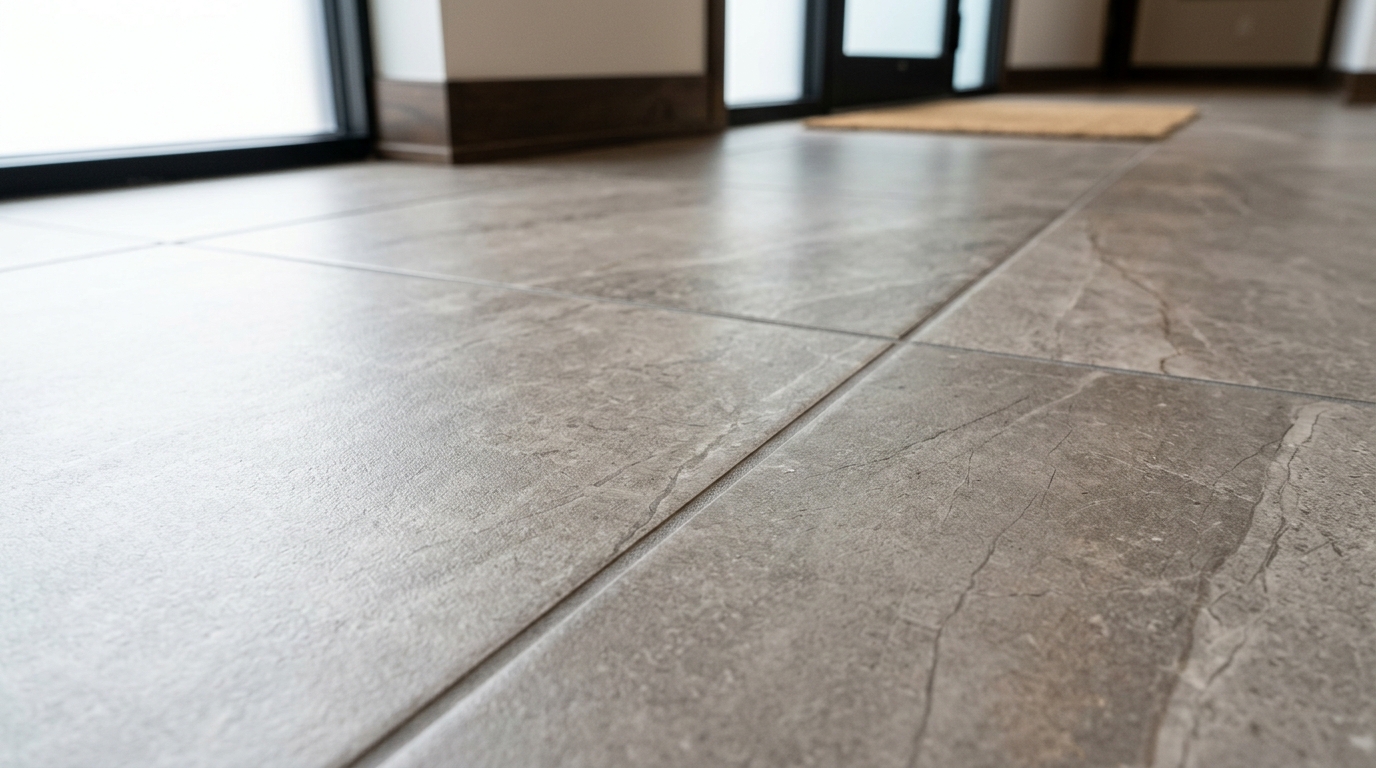
Porcelain tile remains the most reliable flooring choice for Chicago high-traffic areas, and it's what we install in our own homes and recommend most consistently to homeowners planning renovations that need to last. Porcelain is engineered stone rated for specific water absorption levels, typically less than 0.5% by weight for quality flooring-grade porcelain. That low absorption rate means the material doesn't absorb moisture that would cause freeze-thaw damage. When water gets on porcelain and freezes, the ice forms on the surface, not inside the material, so the expansion doesn't crack the tile from inside out. This is fundamentally different from ceramic tile, which is more porous and absorbs water, then cracks when that water freezes. For Chicago kitchen and entryway applications specifically, see our detailed comparison of flooring options in high-traffic zones.
Porcelain tile performs predictably through Chicago's seasonal extremes in ways that other materials simply don't. It doesn't expand and contract with humidity swings the way wood does. It doesn't warp or cup when exposed to moisture the way engineered hardwood claims to resist but ultimately fails. It doesn't develop mold or mildew in our humid summers because it's non-porous and doesn't absorb moisture or organic matter that mold needs to grow. Porcelain survives sub-zero winters without cracking because it doesn't absorb water that expands when frozen. Real estate professionals across Chicago consistently note that homes with porcelain tile flooring in kitchens and bathrooms appraise higher and sell faster than homes with softer flooring materials, partly because buyers understand that porcelain will still be in good condition in 20+ years while other materials will need replacement.
The practical downside of porcelain is cost. Quality porcelain tile costs more than luxury vinyl plank or laminate, and professional installation adds significant labor costs. In a kitchen or bathroom, this investment is typically justified because of high moisture exposure. The upfront cost of porcelain tile is substantially less than the cost of replacing failed flooring, removing water-damaged subfloors, and dealing with mold remediation that cheaper materials create when they fail.
Luxury Vinyl Plank: The Budget-Conscious Middle Ground
Luxury vinyl plank has evolved significantly in the past decade and now represents a legitimate middle option between budget materials and porcelain tile. High-quality waterproof LVP resists moisture much better than older vinyl products did, and the cost is substantially less than porcelain—often 40-60% lower when you factor in material and installation. For homeowners on genuine budget constraints, for rental properties where durability needs are shorter-term, or for those planning to sell within five years, premium waterproof LVP makes sense. The modern products look much more realistic than older vinyl, and installation is faster and cheaper than tile.
The reality of LVP in Chicago's climate is more nuanced than marketing claims. LVP performs reasonably well in moderate moisture environments, but it struggles in truly wet zones like right next to the kitchen sink or shower area where water sits and penetrates seams. LVP also expands and contracts with humidity swings—this is physics, not a flaw in any particular brand. Over 10-15 years in Chicago's humidity extremes, quality LVP shows wear, and cheaper brands develop visible gaps at seams or buckling at the edges where the material has expanded. This expansion and contraction is manageable in a living room or bedroom where moisture exposure is minimal, but becomes problematic in kitchens and bathrooms. Additionally, LVP isn't as durable as porcelain for high-traffic areas. If you drop a heavy pot on porcelain, it withstands the impact. Drop the same pot on LVP and you might dent or scratch the surface. By the time you've upgraded to premium LVP brands with better durability and moisture barriers, the price approaches what quality porcelain costs, so the budget advantage diminishes significantly.
Engineered Hardwood: Not Suitable for Chicago
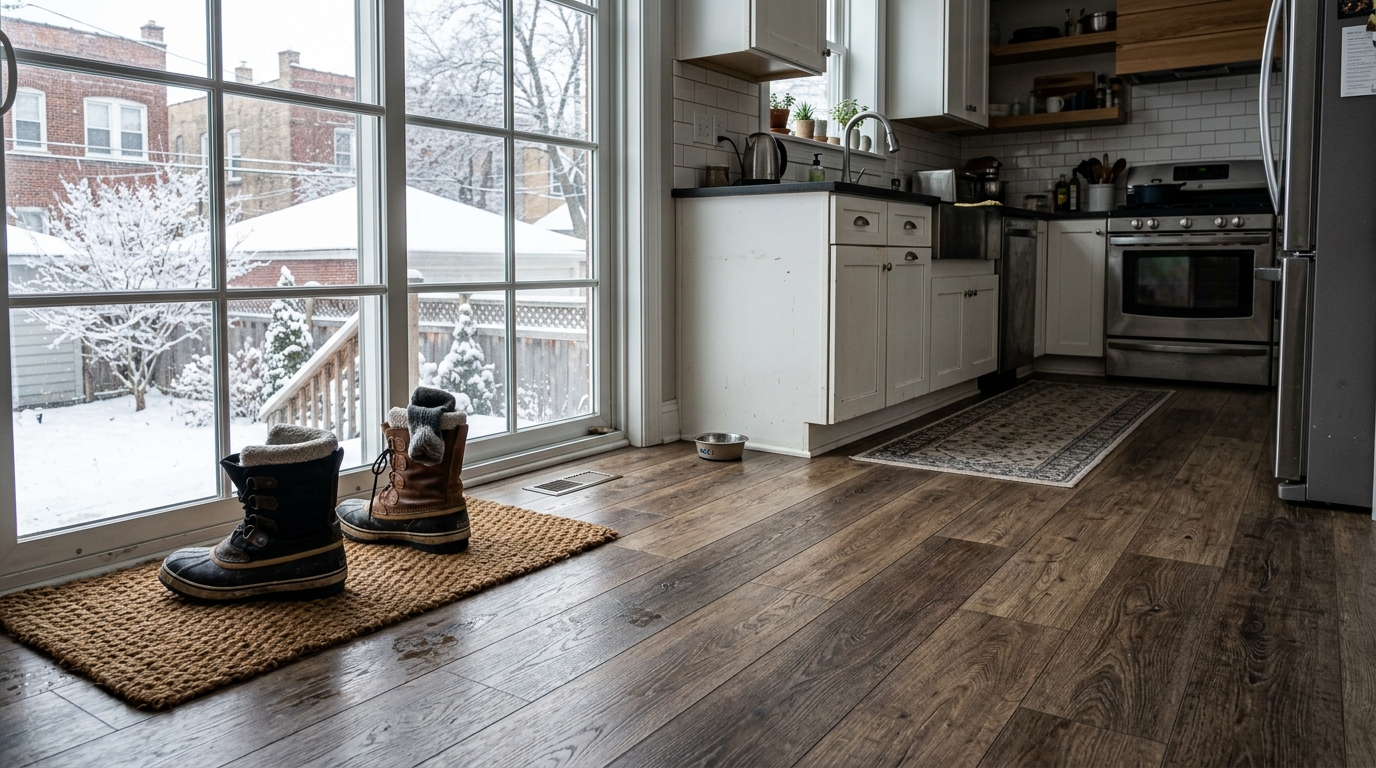
Engineered hardwood claims to resist moisture better than solid hardwood because the base is plywood with a hardwood veneer on top. Despite the engineering, engineered hardwood still underperforms in Chicago's climate and should generally be avoided in kitchens, bathrooms, and any high-moisture areas. The plywood base still absorbs moisture and moves in response to humidity swings and temperature changes. Chicago's humidity extremes cause expansion and contraction that creates visible gaps, buckling, or cupping in the wood. Our freeze-thaw cycles are brutal on wood subfloors and the flooring itself. Homeowners regularly discover that engineered hardwood they installed with confidence 10 years earlier is now warped, cupped, or separated at seams, requiring expensive replacement.
Hardwood's biggest vulnerability in Chicago is moisture expansion and contraction. When humidity rises in summer, the wood absorbs moisture and expands. When our heating systems run in winter and create dry indoor air, the wood releases moisture and shrinks. This seasonal cycle creates visible movement in the flooring that gets worse over years. In high-traffic areas where foot traffic exerts pressure on expanding and contracting boards, the wear patterns accelerate and become very noticeable. If you love the aesthetic of hardwood flooring in your Chicago home, keep it in living rooms and bedrooms where moisture exposure is minimal. Skip it in kitchens, bathrooms, and basements where Chicago's humidity will expose its limitations.
Concrete and Polished Concrete: Durable and Flexible
Concrete flooring has become more popular in Chicago homes and commercial spaces, and it deserves consideration especially in kitchens and high-traffic areas. Concrete is inherently moisture-resistant, non-porous (when sealed properly), and practically indestructible in terms of durability. Concrete won't warp, cup, or fail from freeze-thaw cycles because it's not affected by moisture the way wood-based or vinyl materials are. It can be stained, polished, or finished in numerous ways to achieve various aesthetic effects from industrial to refined and elegant. Sealed concrete requires minimal maintenance beyond regular sweeping and occasional resealing.
The drawbacks of concrete are primarily practical rather than performance-related. Concrete is hard underfoot compared to carpet or wood, which means standing for extended periods in a kitchen can create foot fatigue. Concrete can be cold, especially in winter, though radiant heating systems address this if budget allows. Concrete can potentially crack if your home's foundation settles or shifts, which happens in older Chicago homes especially. Installation requires skilled concrete professionals and isn't as quick as installing other flooring types. Concrete is also a permanent commitment—you can't easily replace concrete flooring the way you can replace vinyl or even hardwood. If you don't like the concrete after a few years, your options are limited. That said, for homeowners who understand concrete's characteristics and embrace them, polished or stained concrete is one of the most durable flooring choices for Chicago's climate.
Laminate and Budget Vinyl: Avoid in Chicago
Budget laminate and low-quality vinyl are genuinely inappropriate for Chicago's climate and should be avoided regardless of cost savings. These materials are designed for dry climates and can't handle moisture exposure. Laminate's fiberboard core absorbs water like a sponge, swells, and delaminates when exposed to moisture. In Chicago's humid summers or near any water exposure, budget laminate fails reliably within a few years. Budget vinyl is thin, doesn't resist moisture adequately, and deteriorates from UV exposure and temperature extremes. The money you save on materials will be spent replacing failed flooring, repairing water-damaged subfloors, and potentially dealing with mold. In Chicago's climate, budget flooring is a false economy that costs more in the long run.
Making Your Flooring Choice
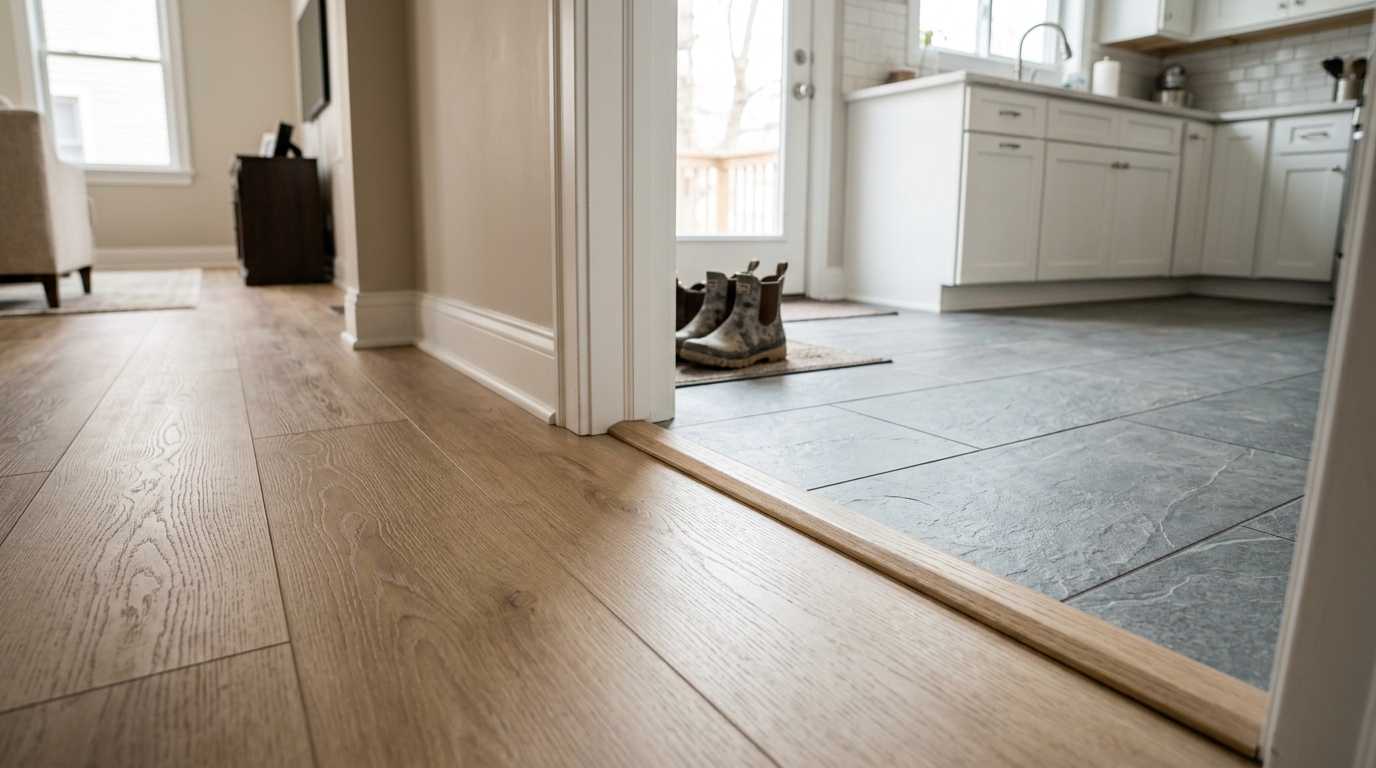
Choosing flooring for Chicago requires balancing three considerations: durability in our specific climate, your budget constraints, and your aesthetic preferences. Porcelain tile is the most durable option and handles Chicago's climate perfectly, making it ideal for kitchens, bathrooms, and high-traffic areas where you want flooring that will last 20+ years with minimal maintenance. Quality luxury vinyl plank is a reasonable alternative if your budget is constrained or if you're renting or planning to sell within five years. Polished or stained concrete is an increasingly popular choice for homeowners who like modern aesthetics and want maximum durability. Hardwood should be reserved for low-moisture areas like living rooms and bedrooms. Avoid budget materials entirely because they fail predictably in Chicago's climate and cost more to replace than quality materials cost upfront. To understand realistic pricing for your flooring project, review our 2026 Chicago flooring cost breakdown.
The climate you live in matters more than most homeowners realize when choosing flooring. Chicago's Lake Michigan humidity, brutal winters, and freeze-thaw cycles create specific challenges that require flooring materials specifically chosen for our climate rather than generic national recommendations. When you understand how Chicago's weather affects flooring, you can make choices that serve your home reliably for decades instead of needing replacement or extensive repair in a few years.
Getting Professional Guidance
If you're planning a kitchen renovation, bathroom remodeling, or whole-home flooring project in Chicago, material selection is where you make decisions that determine long-term satisfaction and durability. The right flooring choice for your climate, your home's specific conditions, and your budget preferences will serve you well. The wrong choice will cost you in repairs, replacement, and frustration. Budget Construction understands Chicago's climate challenges intimately because we've installed flooring in hundreds of homes across the city and suburbs. We know which materials perform locally and which ones fail. We can walk you through the options, explain how each material will behave in Chicago's specific climate, and help you choose flooring that will look great and perform reliably in your home.
If you're ready to discuss a flooring project in your Chicago home and want guidance on which materials will actually survive our climate, visit https://budgetconstructioncompany.com/ to learn more or schedule a free consultation. We're happy to discuss your project, answer questions about flooring durability in Chicago, and provide an estimate for installation. Your flooring choice today will either serve your home beautifully for decades or create problems that you'll regret. Let's make sure you choose correctly.