
Chicago Deck Weather Durability How Freeze-Thaw Cycles Affect Wood vs Composite Performance

Chicago's harsh winters and humid summers create unique challenges for outdoor structures. Wood decks expand and contract dramatically with temperature and moisture swings. Composite decking experiences different challenges in our climate. Understanding how these materials actually perform in Chicago's conditions helps you choose decking that will serve you well for decades rather than requiring frequent repairs or early replacement.
Wood Decks in Chicago's Climate
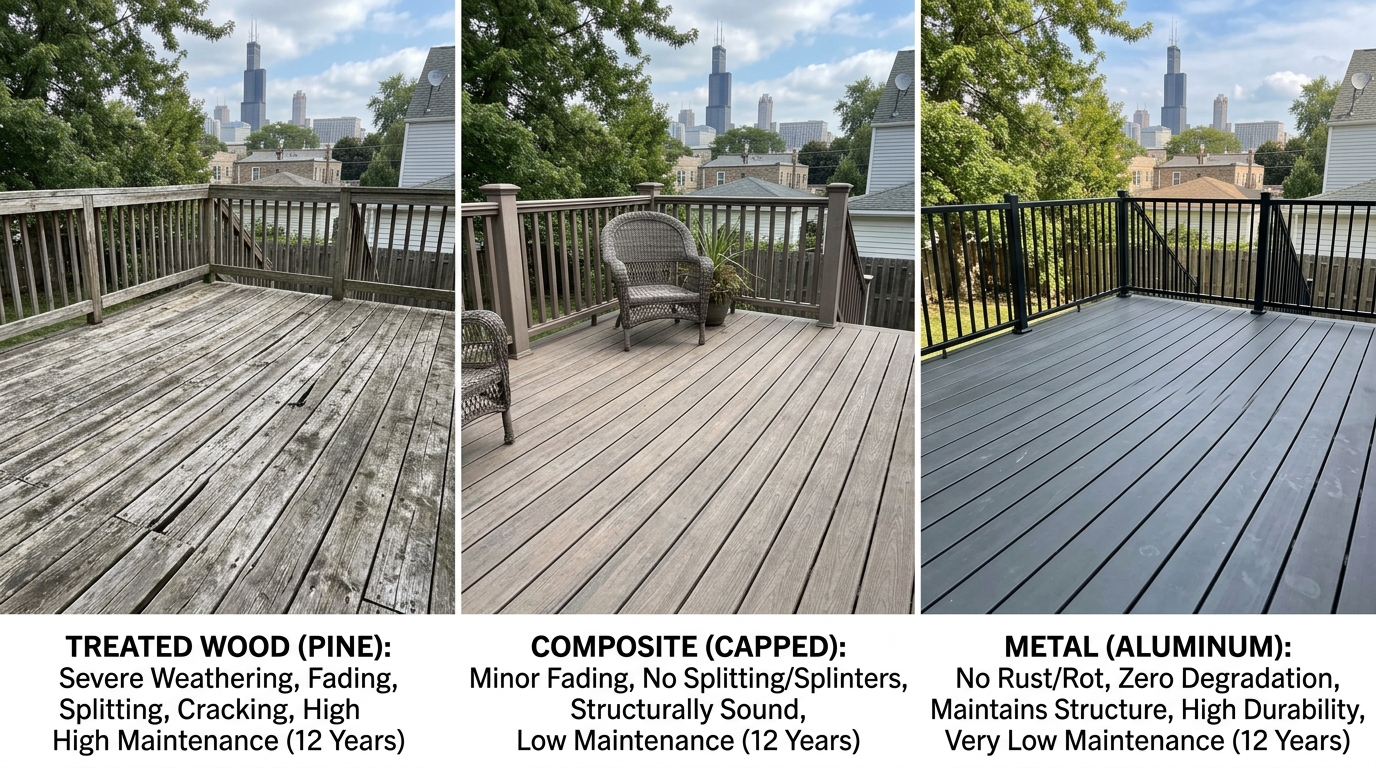
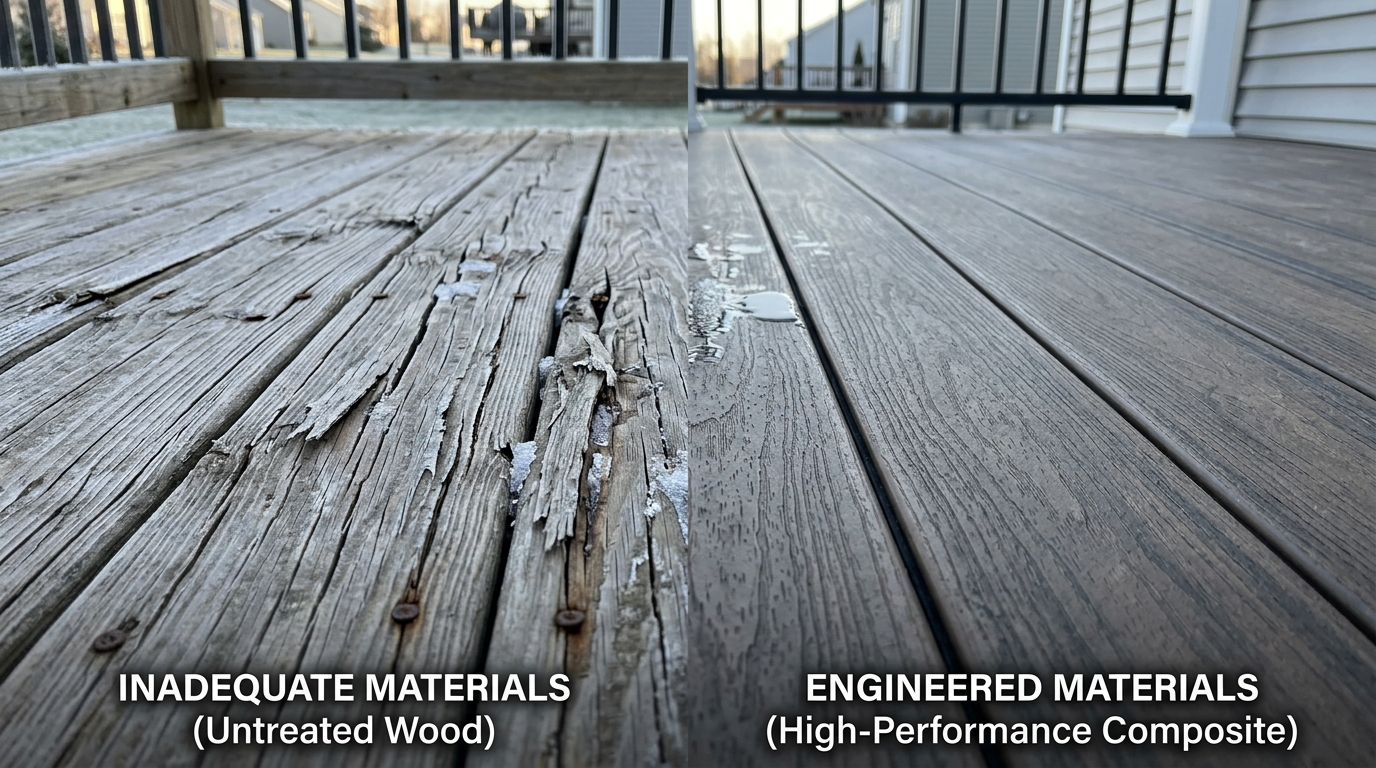
Traditional wood decks face significant challenges in Chicago's freeze-thaw cycles. Wood absorbs moisture from spring and fall rains, snow melt, and humidity. When temperatures drop below freezing, this water freezes and expands, putting stress on wood fiber and fasteners. When temperatures rise above freezing, the ice melts and wood contracts. This repeated expansion and contraction causes:
- Warping and cupping: Wood surfaces develop visible waves and cupping as fibers move differently
- Checking and splitting: Stress cracks form in boards and beams
- Fastener popping: Screws and nails work loose as wood moves
- Paint and stain failure: Finish breaks down from constant movement
- Structural deterioration: Repeated stress degrades wood integrity
High-quality treated wood and cedar resist rot longer than inferior lumber but still undergo movement and require regular maintenance. In Chicago's harsh climate, wood decks require:
- Annual inspection
- Resealing every 2-3 years
- Screw/nail replacement as fasteners pop
- Board replacement as deterioration occurs
- Annual cleaning to prevent mold and mildew
A wood deck in Chicago typically lasts 8-15 years before structural repair becomes necessary. Proper maintenance extends lifespan, but ongoing work is required.
Composite Decking in Chicago
Composite decking—combination of wood fiber and plastic—was developed to reduce wood deck maintenance while maintaining appearance. Composites don't rot or get termites. They don't absorb water like wood.
However, composites have their own challenges in Chicago's harsh climate:
- Staining: Composites stain from organic growth, dust, and debris accumulation
- Fading: UV exposure fades color over time, particularly dark colors
- Expansion and contraction: While less dramatic than wood, composites expand and contract with temperature swings, though less so than wood
- Scratching: Composite surfaces scratch more easily than wood when cleaned aggressively
- Mold and mildew: In humid climates, composites can develop mold and mildew growth that requires regular cleaning
Quality composite decking, when properly maintained with regular cleaning, performs well in Chicago's climate. Lifespan is typically 15-25+ years with minimal structural repair needs.
Cost difference between quality wood and quality composite is often just 20-30 percent, making composite attractive for Chicago homeowners willing to invest slightly more upfront for lower long-term maintenance.
Deck Board Materials Specifically
Pressure-treated wood is durable but requires regular maintenance. A well-maintained pressure-treated wood deck lasts 10-15 years in Chicago.
Cedar is beautiful but less durable than pressure-treated. Cedar typically lasts 5-8 years in Chicago before rot becomes problematic.
Tropical hardwoods (ipe, cumaru) are extremely durable, lasting 20-25+ years in Chicago. However, they're expensive and difficult to work with.
Composite decking (quality brands) lasts 15-25+ years with minimal structural repair, though staining and mold require maintenance.
PVC vinyl decking (all plastic, no wood fiber) is the most durable but expensive. Vinyl lasts 30+ years and requires essentially no structural maintenance, though surface cleaning is needed.
Structural Considerations
Beyond board material, structural components matter equally:
- Joists: Pressure-treated lumber for joists typically lasts 10-15 years if properly maintained. Inspection and board replacement as rot develops is necessary
- Posts and beams: Similar durability requirements. Posts contacting ground moisture-saturated soil deteriorate faster
- Fasteners: Galvanized or stainless steel fasteners resist Chicago's moisture environment. Regular inspection and replacement of popping fasteners is necessary
Structural deterioration often becomes problematic before surface board deterioration, requiring rebuilding under decking that still looks acceptable.
Maintenance Reality
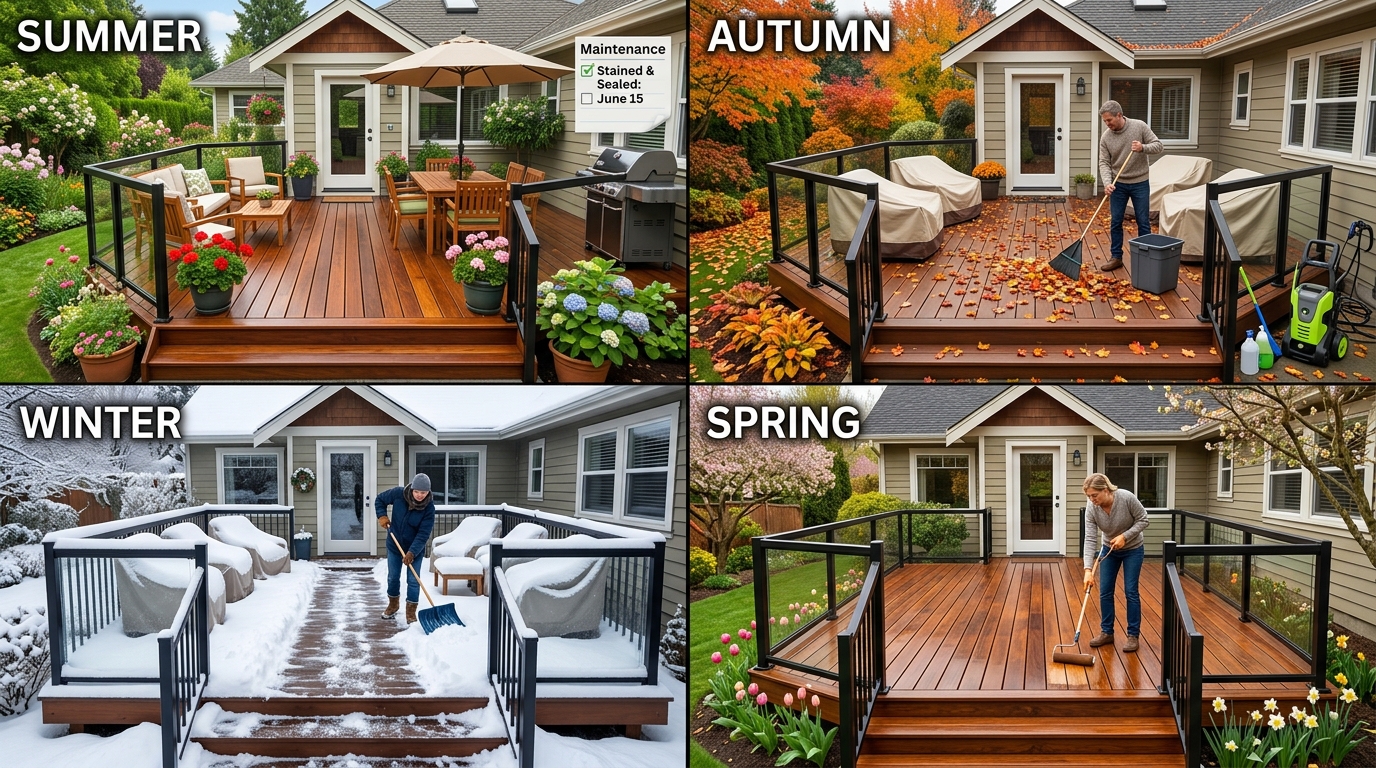
Wood decks require consistent annual maintenance—inspection, cleaning, resealing, fastener replacement, board replacement. Skipping maintenance accelerates deterioration.
Composite decks require less structural maintenance but still need regular cleaning to prevent staining and mold growth. The reduced frequency of major maintenance is their primary advantage.
Vinyl decks require minimal maintenance beyond occasional cleaning.
The maintenance burden you're willing to commit to determines which material makes sense for your situation.
Making Your Deck Choice
If you love the appearance of wood and don't mind regular maintenance, quality pressure-treated wood works in Chicago with proper care. Budget for maintenance costs and lifespan limitations.
If you want durable decking with moderate maintenance, quality composite is excellent choice. The slightly higher upfront cost is offset by reduced maintenance and longer lifespan.
If you want minimal-maintenance decking regardless of cost, vinyl is the longest-lasting, lowest-maintenance option.
Chicago-Specific Considerations
Our freeze-thaw climate is harder on decks than most North American climates. This makes maintenance or composite/vinyl durability more important than in milder regions. A deck that works with minimal maintenance in Arizona or California requires more attention in Chicago.
If you're building or replacing a deck and want guidance selecting materials appropriate for Chicago's specific climate challenges, Budget Construction Company can recommend options that balance your preferences for appearance and maintenance with Chicago weather realities. Contact us for a consultation.