
Chicago Home Remodeling Permits What You Need Before You Start

Whether you're renovating a kitchen, updating a bathroom, finishing a basement, or adding a deck, understanding Chicago's permit requirements before you start prevents costly delays and legal complications. Many homeowners assume that smaller remodeling projects don't need permits or that permits are optional. This misunderstanding leads to unpermitted work that creates serious problems when selling, when dealing with insurance claims, or when neighbors file complaints. Chicago building code is clear: most renovation work requires permits, and the city actively enforces permit requirements. Understanding what needs permits in 2026, how to obtain them, and what to expect throughout the process helps you plan timelines and budgets accurately.
Which Remodeling Projects Actually Require Permits?
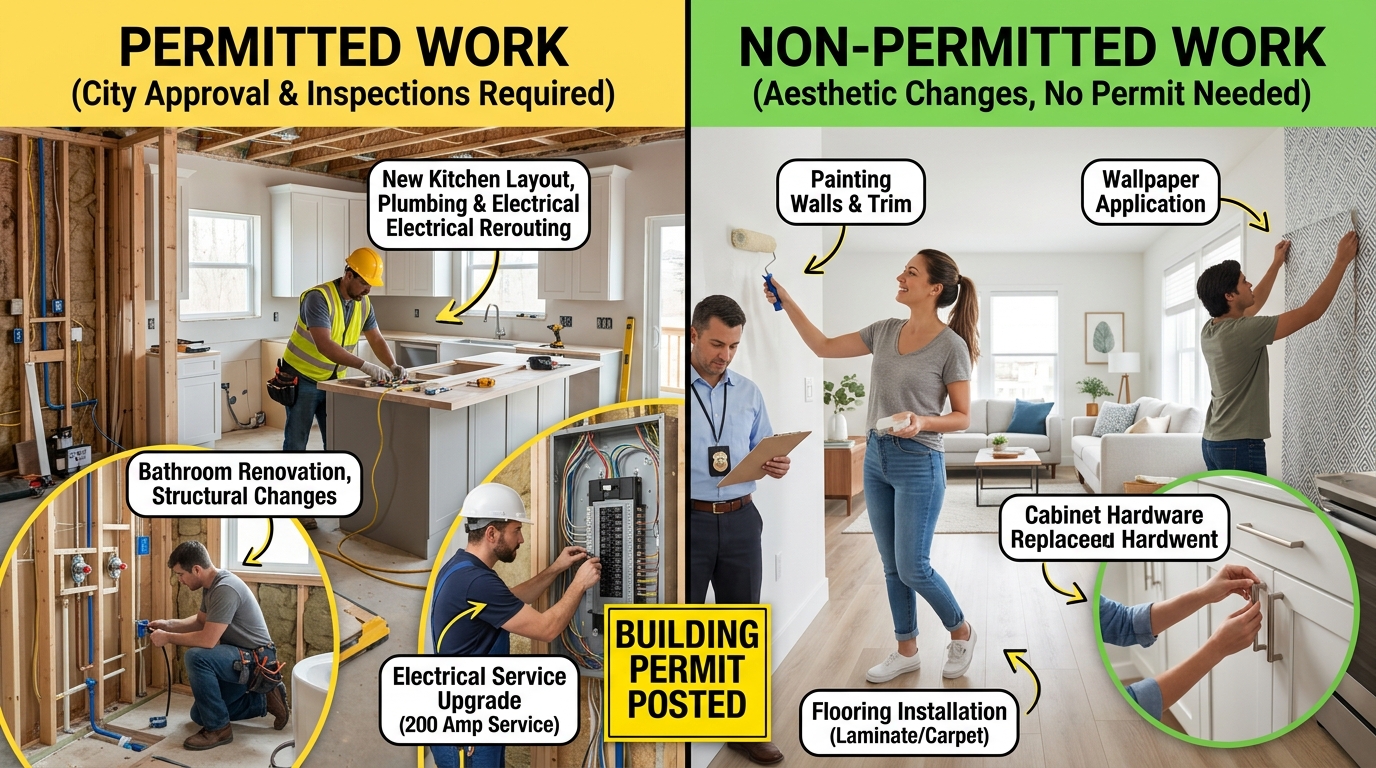
The key distinction in Chicago building code is whether your project involves structural changes, system modifications, or only cosmetic updates. Cosmetic work—painting, new wallpaper, replacing cabinet hardware, installing new light fixtures in existing locations—doesn't require permits. You can paint your kitchen purple and install new cabinet doors without any city approval. But any project involving electrical work, plumbing modifications, structural changes, window or door replacement, or HVAC work requires permits.
Specific projects clearly requiring permits include kitchen remodeling (new layout, new appliances, new electrical circuits, new plumbing), bathroom remodeling (new fixtures, new plumbing, ventilation changes), window replacement, door replacement, any interior wall removal or installation, basement finishing with new walls or electrical work, deck or patio construction, roof replacement, siding or exterior work, HVAC system replacement or installation, electrical system upgrades, water heater replacement, and fixture relocation. If you're uncertain whether your specific project needs permits, the safest assumption is yes. Your contractor should clarify this during initial consultation.
The gray area involves fixtures and appliances. Installing a new refrigerator in an existing location doesn't require a permit. Installing a new dishwasher in a new location and running new plumbing and electrical to that location does. Installing a chandelier in an existing electrical outlet doesn't require a permit. Running new electrical circuits and installing new lighting throughout a kitchen remodel does. The underlying principle is consistent: if the work involves structural changes, system modifications, or routing new utilities, you need a permit. If you're just replacing existing fixtures in existing locations, you typically don't.
Types of Permits You Might Need
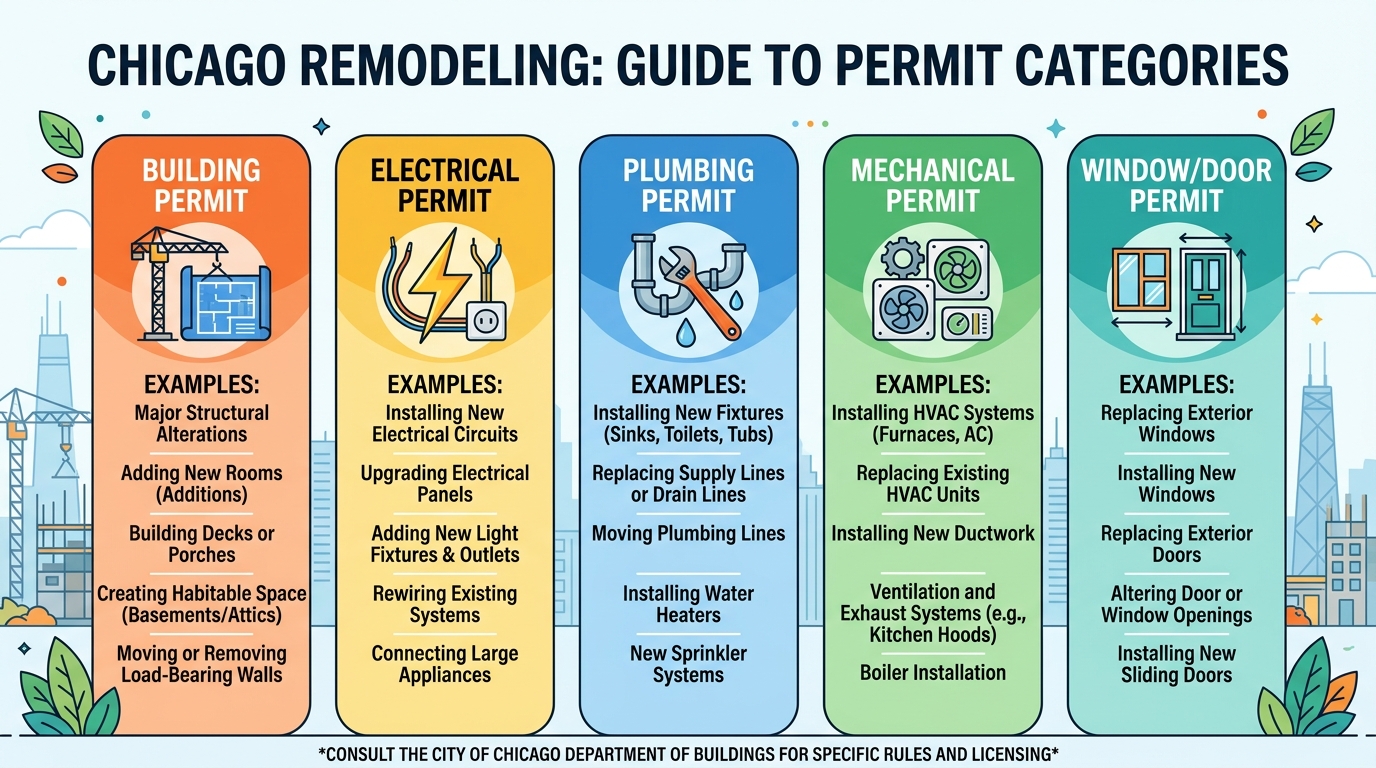
Chicago's building department issues various permit types depending on project scope. A residential Building Permit covers overall structural work, wall changes, new construction within the home, and general renovation scope. An Electrical Permit covers new electrical circuits, outlets, switches, panel upgrades, and lighting installation. A Plumbing Permit covers new water supply lines, drain lines, fixture installation, and plumbing system modifications. A Mechanical Permit covers HVAC installation, ductwork, gas lines, and ventilation work. A Window/Door Permit covers window replacement, door installation, and structural modifications related to openings. A Roof Permit covers roof replacement or structural roof work.
Not every project requires all permit types. A kitchen remodeling with new layout might require Building, Electrical, Plumbing, and Mechanical permits. A bathroom remodeling might require Building, Electrical, and Plumbing permits. A window replacement project might require only a Window permit. A basement finishing with new walls and electrical might require Building and Electrical permits. Your contractor helps determine which specific permits your project needs.
The Permit Application Process and Timeline
Once your plans are ready—whether that's formal architectural drawings for a major remodeling or simpler sketches for a smaller project—you submit your permit application to the Chicago Department of Buildings. The application includes the plans, project description, estimated value, contractor information, and required fees. The building department reviews applications in order received, and processing times vary based on workload and project complexity.
Current permit approval timelines in Chicago typically range from four to ten weeks for straightforward residential remodeling projects. Simpler projects with clear scope and complete plans might get approved in four to six weeks. More complex projects with multiple trades, structural changes, or requests for clarifications might take eight to ten weeks. During busy seasons—spring through early fall—processing times extend because the department receives high application volumes. If you submit your application in March during peak season, expect longer processing than if you submit in December during slow season.
The building department may request clarifications or revisions to submitted plans. Common requests include showing electrical outlet and switch locations more clearly, providing plumbing riser diagrams, detailing structural support for wall removal, or clarifying compliance with specific code requirements. One round of plan revisions is typical for complex projects. Each revision request delays approval by two to four weeks as you correct plans and resubmit.
Once your permit is issued, you have legal permission to begin work. However, you likely still need to obtain specific trade permits (Electrical, Plumbing, Mechanical) if your project involves those trades. These typically process faster—two to four weeks—because they follow the main permit approval.
Inspections During Your Project
Once permitted work begins, inspections happen at specific stages. The building department schedules inspections after you notify them that a particular phase is ready. For example, when your electrical rough-in is complete (all wiring and outlets installed but before walls are closed), you call and request an electrical inspection. The inspector visits within three to five business days, verifies the work meets code, and either approves it to move forward or identifies issues requiring correction.
Typical inspection stages for a kitchen remodeling include framing inspection (if walls are moved), electrical rough-in inspection, plumbing rough-in inspection, and final inspection once all work is complete. A bathroom remodeling typically requires electrical rough-in, plumbing rough-in, and final inspections. A basement finishing project might require framing, electrical, and final inspections depending on scope.
If an inspector identifies violations during inspection, you must correct them and request re-inspection. Violations aren't punitive—they're the city ensuring your work meets code and is safe. Most violations are straightforward to correct. Occasionally, violations require significant changes. Knowing this upfront and budgeting time for corrections prevents end-of-project surprises.
Certificate of Occupancy and Final Approval
Once all inspections pass and all corrections are completed, the building department issues a Certificate of Occupancy or a Final Permit Approval, depending on project type. This is the city's official documentation that your work is complete and meets code. For whole-house renovations, this certificate is essential for resale and insurance purposes. For smaller remodeling projects, the final inspection signoff serves the same purpose.
You technically cannot legally occupy newly renovated space or use new systems without final approval. Insurance won't cover unpermitted work, and lenders won't finalize financing on properties with outstanding code violations. This is why obtaining permits matters even though it costs money and takes time. The alternatives—unpermitted work and its consequences—are far more expensive.
Permit Costs in Chicago for 2026
Building permit fees vary based on project scope and estimated value. For a kitchen remodeling estimated at $50,000, the building permit might cost $300 to $500. For a bathroom estimated at $30,000, perhaps $200 to $400. For basement finishing estimated at $60,000, perhaps $400 to $600. Individual electrical, plumbing, and mechanical permits add $50 to $200 each depending on project scope. Total permit costs for a comprehensive remodeling project typically range from $500 to $2,000 depending on what you're doing.
These fees aren't excessive or optional. They fund the city's building inspection department, ensure code compliance, and protect homeowners. Budget permit costs into your overall project budget upfront rather than trying to avoid them. Avoiding permits costs far more when problems emerge.
Contractor Responsibilities vs. Your Responsibilities
Your contractor typically handles submitting permit applications, paying associated fees, scheduling inspections, and coordinating with the building department. This is standard contractor responsibility. However, you remain ultimately responsible for ensuring permitted work is done and properly inspected. Never hire a contractor who suggests skipping permits or avoiding inspections. This is a fundamental red flag indicating you should find different contractors.
Reputable contractors welcome inspections because inspections document that work meets code. Inspections protect the contractor by providing professional verification of quality. Contractors who avoid inspections might be doing work that won't pass inspection, which is a serious problem.
Timeline Implications for Your Remodeling Project
Permit approval timelines affect your overall project schedule significantly. If you're planning a kitchen remodeling and expect to begin work in month two, you need to account for permit approval, which might take six to ten weeks. Submit your application as soon as plans are ready, not after you've committed to a specific start date. The earlier you submit, the earlier approval comes.
Add permit approval timeline to your overall project estimate. A kitchen remodeling that takes twelve weeks of actual construction work stretches to eighteen to twenty weeks when you account for permit approval, inspections, and potential revision requests. Homeowners who don't factor permit time into project planning often find themselves waiting for approval when they expected to be finishing demolition.
How to Expedite the Permit Process
Several strategies help move permits through the system faster. Submitting complete, detailed plans that clearly show all aspects of your project prevents revision requests. Working with an architect or designer who understands Chicago code requirements helps ensure plans are right the first time. The cost of detailed plans upfront is far less than the cost of plan revisions and approval delays.
Hiring an experienced contractor familiar with Chicago's permit process helps. These contractors know what the building department expects, how to prepare applications correctly, and which inspections will be required. Their familiarity accelerates the process. An inexperienced contractor might submit applications that get rejected for missing information, which delays approval significantly.
Timing your application submission strategically can help. If you submit your application in December during slow season, your application moves to the front of the queue sooner than if you submit in March during peak season. Plan your project timeline around permit submission if possible.
For complex projects, hiring a permit expediter who manages the application process professionally might be worthwhile. These services cost $500 to $2,000 but often save more in timeline acceleration than they cost. If your remodeling project depends on meeting a specific deadline, professional expediting ensures timely approval.
Common Permit Mistakes to Avoid
Many homeowners make preventable mistakes that extend timelines. Submitting incomplete plans is common. Plans lacking sufficient detail get returned with revision requests. Provide clear electrical layouts, plumbing schematics, structural details, and material specifications upfront. The time to detail plans is during the planning phase, not after you've submitted for approval.
Not communicating clearly with contractors about permit responsibilities causes confusion. Before hiring a contractor, confirm explicitly that they will obtain all necessary permits, schedule inspections, and manage the entire permitting process. Get this in writing in your contract. Don't assume; verify.
Waiting to request inspections until weeks after work is complete causes delays. Request inspections as soon as specific work phases are actually complete. A framing inspection requested immediately allows electrical work to proceed quickly. Delays cascade throughout the project.
Failing to correct violations promptly extends timelines. If an inspector identifies issues, correct them immediately and request re-inspection the same week rather than postponing. Quick corrections minimize delays.
Planning Your 2026 Remodeling With Permits in Mind
As you plan any remodeling project for 2026, factor permit approval and inspection timelines into your schedule from the beginning. Don't commit to a contractor start date before your permits are approved. Submit applications well in advance of your preferred start date. Plan for four to ten weeks of permit approval time. Understand that inspections will be required at various phases and budget time accordingly.
Talk with potential contractors about their permit experience. Ask how they typically handle applications, what their success rate is for on-time approval, and how they manage inspections. Contractor experience and professionalism during the permit phase predicts how smoothly the entire project will progress.
Understand that permits exist to protect you. Code compliance ensures your home is safe, properly wired, properly plumbed, and structurally sound. Inspections verify that your contractor is doing quality work. The time and cost of permits is an investment in a safe, code-compliant home that will have full market value and will satisfy insurance requirements.
Getting Professional Help
If your remodeling project is complex or if you're uncomfortable managing the permitting process, hiring a general contractor or project manager to handle it simplifies your life significantly. They manage the bureaucratic process and ensure nothing falls through the cracks. The cost is worthwhile compared to the stress and potential mistakes of managing it yourself.
For straightforward projects, your contractor's standard permit management is typically sufficient. For complex projects or if you need guaranteed timeline adherence, professional oversight provides peace of mind.

The Bottom Line on Chicago Remodeling Permits in 2026
Chicago's permit requirements exist to ensure that remodeling work is safe, code-compliant, and doesn't create hazards. Understanding which projects need permits, planning realistic timelines that account for approval and inspections, and working with experienced contractors who manage the process professionally keeps your project on track and protects your home's value. Budget time and cost for permits upfront rather than treating them as optional. Your future self will thank you when your remodeling is complete, code-compliant, and ready to provide years of enjoyment.
If you're planning a remodeling project for 2026 and want guidance understanding permit requirements specific to your project, Budget Construction Company can help. We handle all permit coordination, manage inspections efficiently, and ensure your project meets Chicago code requirements. Contact us for a consultation to discuss your remodeling plans and how we manage the permitting process to keep your project on schedule.