
Chicago Second Story Addition Costs: 2026 Pricing Guide for Homeowners in the Chicago Area

Most Chicago homeowners considering a second floor addition have no idea where to start with budgeting. This guide breaks down exactly what you can expect to pay in 2026, from structural foundation reinforcement to finishing costs, with specific considerations for Chicago's unique housing stock and permit requirements.
Second-story additions are some of the most expensive home renovation projects Chicago homeowners undertake because they involve structural engineering, foundation assessment, roof integration, and the complexity of building on top of existing structures that weren't originally designed for additional stories. A 300-square-foot second story in Chicago ranges from $90,000 to $150,000 or more depending on your neighborhood, your home's structural condition, and the quality level you're selecting. Understanding what drives second-story costs helps you budget realistically and understand whether a second-story addition makes financial sense for your situation compared to first-floor expansion or other solutions. This guide breaks down 2026 Chicago second-story addition costs, helping you understand what you'll actually pay from structural engineering through final finishing.
Understanding Second-Story Cost Structure
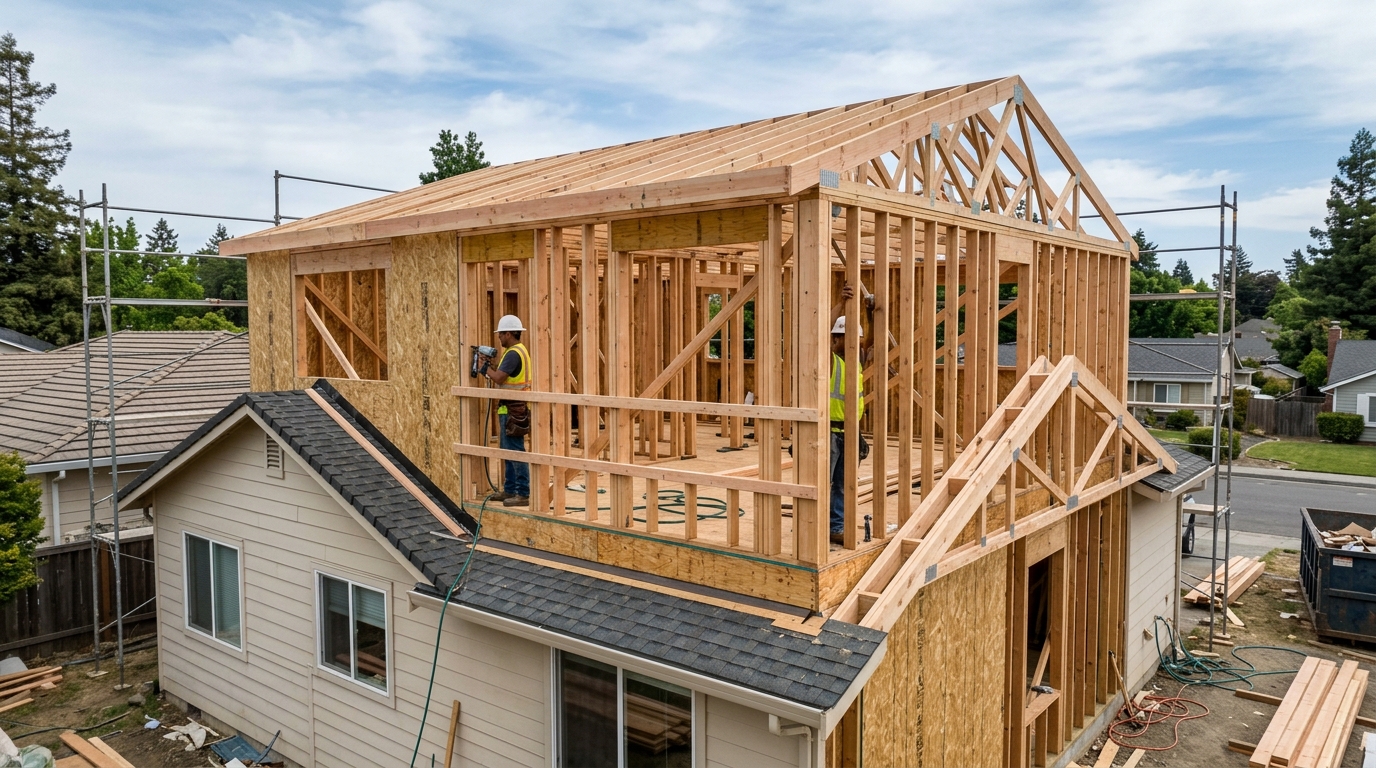
Second-story additions cost significantly more per square foot than first-floor additions because of structural complexity, foundation requirements, and integration challenges. While first-floor additions run $200-350 per square foot in Chicago, second-story additions run $300-500 per square foot, with many premium projects exceeding $500 per square foot. This 40-50% cost premium reflects real structural and engineering work required to add weight safely to existing structures.
Costs break down roughly into: structural engineering and permits (5-8% of total), foundation assessment and reinforcement if needed (5-15%), exterior work including roof removal and integration (15-20%), framing and structural (15-20%), mechanical systems integration (10-15%), interior finishing (20-25%), and contractor overhead and profit (10-15%). These percentages vary based on your specific project, but they illustrate that structural work and integration of systems represents nearly half the cost of a second-story addition.
Cost Per Square Foot Baseline
Second-story addition costs in Chicago baseline at $300-500 per square foot depending on neighborhood, existing home condition, and finish selections. A 300-square-foot second-story addition budgets from $90,000 at the lower end to $150,000+ at the higher end. A 400-square-foot second story ranges from $120,000 to $200,000+. These figures assume moderate finish selections and typical structural requirements. Homes in poor structural condition or with complex existing systems might cost more. Luxury finishes or complex design might exceed these ranges significantly.
The wide range within these figures reflects that two second-story additions of identical size might cost dramatically differently based on several factors. An addition in a home with excellent existing structure, modern systems, and accessible existing foundations costs less than an addition in a home with questionable structural condition, aging systems, or foundation challenges. An addition with simple design and standard finishes costs less than one with custom details or high-end materials.
Neighborhood-Specific Second-Story Addition Costs
Second-story addition costs vary by Chicago neighborhood primarily due to labor rates, contractor competition, and the age and condition of homes being added to. Premium neighborhoods command higher labor rates while older neighborhoods with more construction activity sometimes have lower costs due to contractor competition.
Lakeview and Lincoln Park: Premium neighborhoods command premium pricing for second-story work. Expect $380-500+ per square foot. A 300-square-foot second story budgets $114,000-150,000+. These neighborhoods have older Victorian and greystone homes requiring structural assessment and often foundation work. Contractor demand is high, labor rates premium. Historic preservation requirements in parts of Lakeview add complexity and cost.
Rogers Park and Avondale: Strong but slightly less premium pricing than lakefront. Expect $340-450 per square foot. A 300-square-foot second story budgets $102,000-135,000. These neighborhoods have older housing stock similar to Lakeview but slightly less contractor competition, resulting in somewhat lower pricing.
Lincoln Square and Ravenswood: Moderate-premium pricing in popular neighborhoods. Expect $320-420 per square foot. A 300-square-foot second story budgets $96,000-126,000. These neighborhoods have desirable locations without the premium pricing of lakefront areas.
Portage Park and Jefferson Park: More moderate pricing in northwest side neighborhoods. Expect $280-380 per square foot. A 300-square-foot second story budgets $84,000-114,000. These neighborhoods offer opportunity for cost-effective second-story additions compared to central Chicago.
Pilsen and Bridgeport: Most moderate pricing in established Chicago neighborhoods. Expect $260-360 per square foot. A 300-square-foot second story budgets $78,000-108,000. Lower pricing reflects moderate labor rates and contractor competition, though gentrification in parts of Pilsen is increasing prices.
Suburban Second-Story Addition Costs
Suburban second-story costs vary by specific suburb and proximity to Chicago. Evanston and Oak Park command premium pricing comparable to or exceeding Lakeview because of strong real estate values and historic district requirements. Expect $360-480 per square foot in these communities. A 300-square-foot second story budgets $108,000-144,000+.
Skokie and Morton Grove offer more moderate suburban pricing. Expect $290-390 per square foot. A 300-square-foot second story budgets $87,000-117,000. These suburbs have good contractor availability and less historic preservation pressure than Evanston and Oak Park.
Northbrook and Wilmette command premium pricing as affluent suburbs. Expect $370-490 per square foot. A 300-square-foot second story budgets $111,000-147,000. These communities have strong real estate values and high-quality contractor demand.
Factors That Increase Second-Story Costs
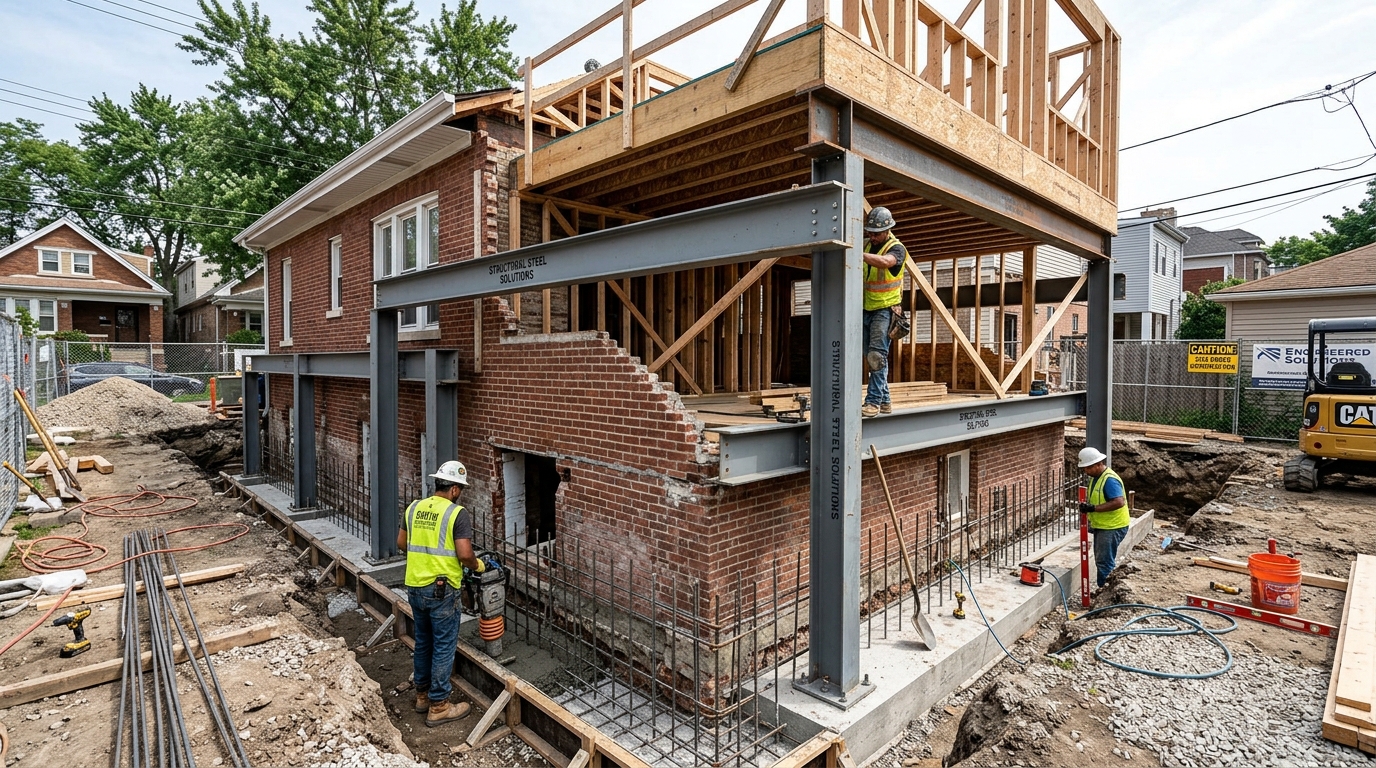
Several factors push second-story addition costs beyond baseline estimates. Structural reinforcement or foundation work required to support additional weight adds $5,000-20,000+ depending on extent of required work. Soil conditions affecting foundation stability increase costs. Foundation piers or underpinning work if needed can add $15,000+ to project cost.
Roof integration complexity increases costs if your existing roof structure isn't conducive to simple integration. Tearing off and replacing roof versus integrating with existing structure affects cost significantly. Second-story additions on homes with complex existing roof lines cost more than those on simple gable roofs.
Systems integration—extending electrical, plumbing, and HVAC to serve second story—costs vary based on your home's existing system locations. Horizontal layouts with systems running the length of the home cost more to extend than more compact layouts. System upgrades if existing capacity is insufficient add cost.
Historic district design review in communities like Evanston, Oak Park, and parts of Lakeview adds timeline and sometimes requires design modifications increasing costs. Compliance with historic district guidelines might require specific materials or details increasing cost.
Structural changes required to create staircase access from first to second story add cost if not efficiently integrated. Complex stair locations or multiple stair locations increase framing cost.
Factors That Decrease Second-Story Costs
Some factors allow second-story additions to cost less than maximum estimates. Simple designs with straightforward geometry cost less than complex designs requiring custom framing. Basic finishes cost less than high-end materials and custom details. Homes with robust existing structure requiring minimal reinforcement cost less than those requiring significant structural work.
Efficient system locations in existing homes allow economical extension to second story. Homes with systems centrally located or easily accessible save on extension costs. Projects bundled with contractor's other work in the area might receive volume pricing. Selecting standard materials and fixtures rather than custom options reduces cost.
Material and Labor Breakdown
Second-story addition costs divide roughly 40-50% materials and 50-60% labor. For a $120,000 second-story addition, expect $48,000-60,000 in materials and $60,000-72,000 in labor. Labor costs vary significantly by neighborhood and contractor expertise. Structural work typically represents the highest labor cost component because it requires skilled, experienced trades.
Material costs are more standardized but vary based on quality selections. Lumber and structural materials represent significant material cost. High-end finishes and fixtures increase material costs substantially. Energy-efficient windows and HVAC systems cost more upfront than basic systems but provide long-term value.
Budget and Contingency Planning
Budget 15-20% contingency for second-story additions because structural unknowns are common. You won't know exactly what you'll encounter until you start work. Foundation conditions might be worse than assessed. Existing structural work might be found during construction. Code compliance modifications might be required. Budget conservatively with realistic contingency rather than hoping projects come in under budget.
Include all costs in your total budget: design and architectural fees ($2,000-5,000), structural engineering ($2,000-4,000), permits ($1,000-3,000), foundation assessment if required ($1,500-3,000), plus construction cost. Total project budget is significantly higher than construction cost alone.
Timeline also affects cost. Longer construction periods with standby costs, multiple inspection delays, or contractor scheduling issues increase costs. Budget realistic timeline and understand that second-story additions typically take six to nine months from permit through completion.
Comparing Contractor Quotes
Get quotes from at least three contractors experienced in second-story additions. Quotes should itemize structural work, roof integration, systems integration, and finishing separately so you understand what's included. Wide variation between quotes warrants investigation. Ask low bidders what they're doing differently and ask high bidders what justifies their premium.
Verify that quotes include structural engineering and building permits. Some contractors underestimate these items initially then charge additional fees later. Comprehensive quotes upfront prevent surprises. Check whether quotes include permit coordination, inspection scheduling, and other project management responsibilities.
Request references from recent second-story projects. Talk directly with homeowners about whether costs tracked to estimates, timeline was realistic, and they're satisfied with completed work. References reveal patterns you won't discover from the quote alone.
Financing Second-Story Additions
Second-story additions are substantial investments typically financed through home equity loans or lines of credit. Many homeowners use home equity to access lower interest rates than personal loans. Some contractors offer financing options, but comparing rates with your own lender usually provides better terms.
Consider whether second-story addition increases home value sufficiently to justify cost. In neighborhoods where second-story additions are common and architecturally appropriate, additions typically recoup 80-90% of cost in increased home value. In neighborhoods where second stories are less common, value recoupture might be lower. Discuss return on investment with a real estate professional before committing.
Getting Accurate Estimates
These pricing guides represent 2026 Chicago market conditions, but your actual cost depends on your specific property and project scope. Homes with complex structural situations, extensive systems work, or premium finish selections cost more than baseline estimates. Get contractor estimates for your specific situation rather than relying purely on neighborhood averages.
A quality contractor will assess your home's structural condition, discuss your addition goals, evaluate existing systems, and provide detailed estimates reflecting your actual project rather than generic calculations. Budget Construction has completed second-story additions throughout Chicago neighborhoods and understands how structural conditions, existing systems, and neighborhood factors affect real-world costs. If you're planning a second-story addition and want guidance on realistic costs for your specific property, visit https://budgetconstructioncompany.com/ to schedule a consultation. We'll assess your home's structural condition, discuss your addition goals, and provide detailed estimates so you can budget accurately for your project.