
Chicago Weather-Proof Renovation Material Choices That Survive Midwest Winters and Humid Summers

The same hardwood floor that works beautifully in Denver will fail in a Chicago bungalow. The insulation that's adequate in Texas won't cut it in a Chicago winter. The siding that survives fine on the East Coast deteriorates rapidly here. Chicago's extreme seasonal temperature swings—from sub-zero January mornings to humid eighty-five-degree July afternoons—create unique material demands that generic renovation advice misses entirely. Lake Michigan's humidity influences Chicago's weather patterns year-round, creating extended periods of high moisture that challenge materials and finishes. When you're planning a renovation, understanding which materials perform well in Chicago's climate prevents costly failures down the road. A material choice that seems perfect in a showroom might become a maintenance nightmare or fail prematurely in Chicago's actual climate conditions.
Understanding Chicago's Unique Climate Challenges
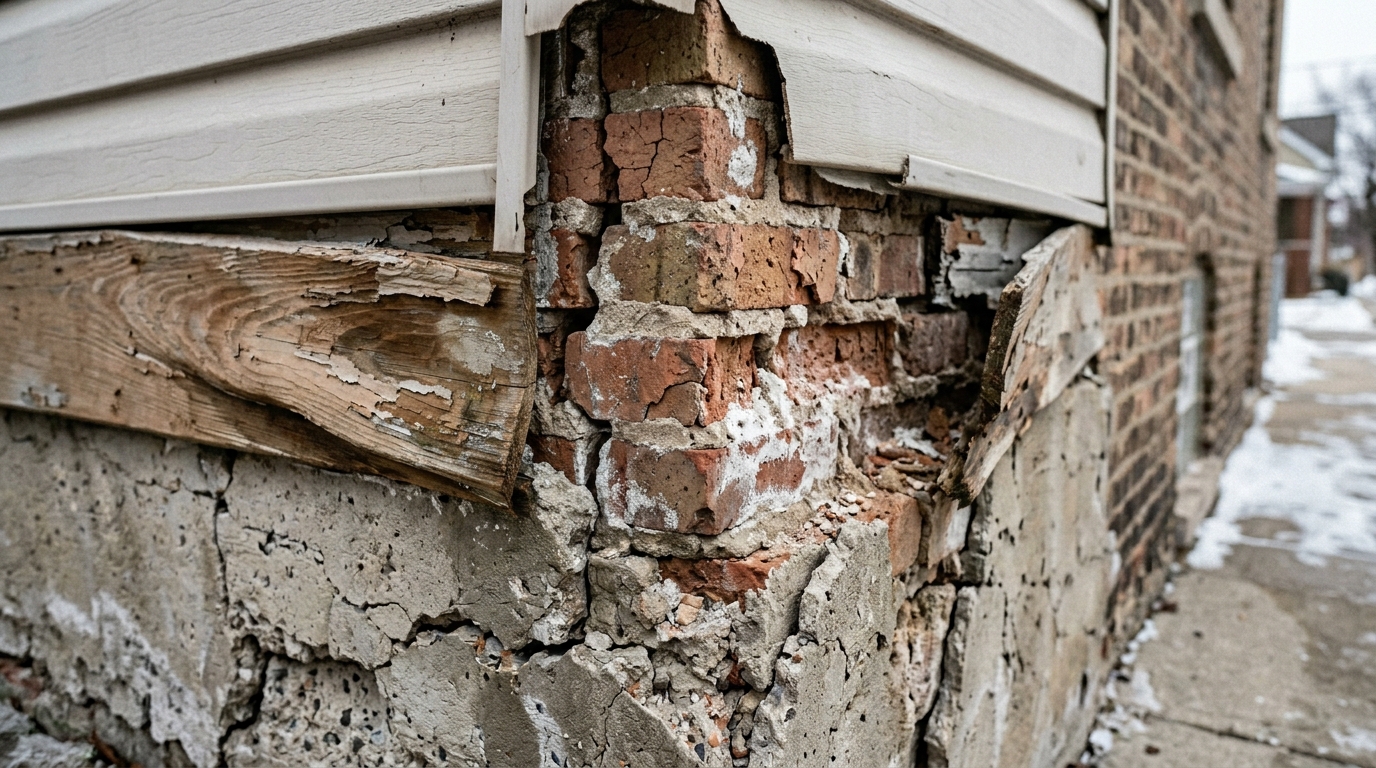
Chicago's climate sits in a sweet spot of extremes. Winter temperatures routinely drop below zero, creating freeze-thaw cycles that destroy materials unprepared for temperature swings exceeding ninety degrees. Summer humidity from Lake Michigan creates moisture conditions that corrode, warp, and degrade materials designed for drier climates. Spring and fall transitions bring rapid temperature changes that stress materials through repeated expansion and contraction. This isn't a stable climate like San Diego or Phoenix where materials can be selected based primarily on aesthetic preference. In Chicago, climate durability is a primary selection criteria.
Freeze-thaw cycles are particularly destructive. Water penetrating materials expands as it freezes, creating internal stress that cracks, splits, and deteriorates materials. Concrete driveways suffer, wood exposed to elements cracks and rots, and materials with poor freeze-thaw ratings fail prematurely. Humidity from Lake Michigan creates moisture conditions that encourage mold, mildew, and rot. Basements in Chicago experience chronic moisture challenges that materials aren't designed to handle without proper drainage and ventilation systems supporting them.
Materials that work in stable climates often fail in Chicago within five to ten years. A homeowner choosing flooring based on what they saw in a showroom or what a friend used in Arizona might end up replacing that flooring in six years. The cost of replacement, plus the disruption of tearing out failed material and installing new material, far exceeds the cost difference of choosing climate-appropriate material initially.
Flooring Materials That Actually Survive Chicago
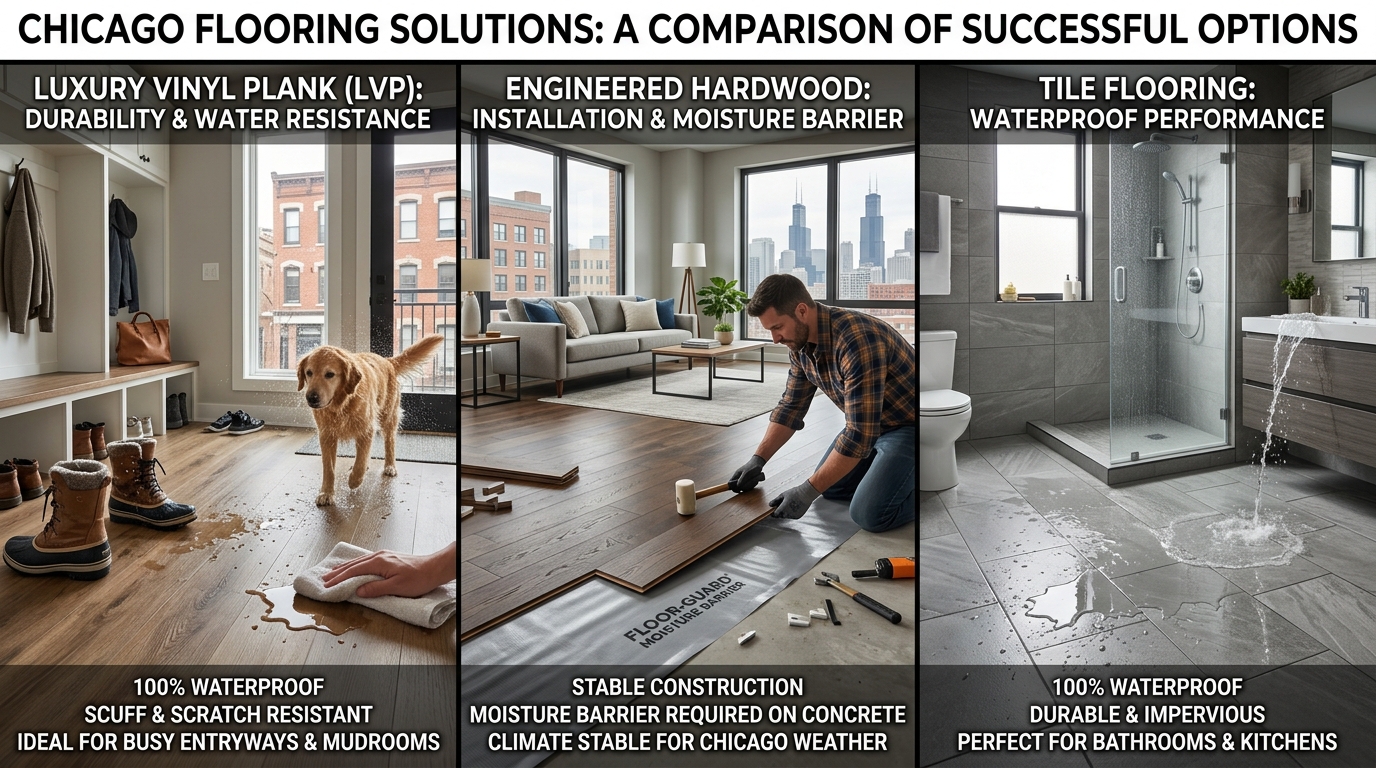
Hardwood flooring is beautiful and works well in Chicago homes, but only when properly selected and installed. Solid hardwood expands and contracts significantly with humidity changes, which is why Chicago's moisture fluctuations cause movement, cupping, and gapping in poorly installed hardwood. Engineered hardwood—plywood base with hardwood veneer—performs better in Chicago because the plywood base resists movement. Installation is critical: hardwood must acclimate to Chicago's humidity for days before installation, and moisture barriers must be installed under the flooring. Without proper installation, even quality hardwood fails within a few years.
Luxury vinyl plank (LVP) flooring performs exceptionally well in Chicago. It's waterproof, resistant to humidity fluctuations, handles temperature swings without issues, and maintains its appearance despite moisture. LVP costs less than quality hardwood and outperforms it in Chicago's climate. Many Chicago homeowners initially wanted hardwood but switched to high-quality LVP that mimics wood's appearance after learning about hardwood's moisture sensitivity in this region. LVP's only drawback is that it's a synthetic material some homeowners perceive as less authentic than real wood.
Ceramic tile and porcelain tile are excellent flooring choices for kitchens, bathrooms, and basements in Chicago. Tile is impervious to moisture, unaffected by temperature swings, and highly durable. Grout is the weak point—low-quality grout cracks and allows moisture behind tile. Invest in quality grout and proper installation with waterproofing membranes in bathrooms and basements. Tile remains popular in Chicago homes for good reason: it genuinely performs well here.
Stone flooring—slate, granite, limestone—works well in Chicago if properly sealed and maintained. Natural stone is moisture-sensitive and requires regular sealing to prevent staining and water infiltration. Budget ongoing maintenance for stone flooring. Unsealed stone in a Chicago basement will deteriorate. Properly maintained stone looks beautiful and lasts decades.
Avoid materials that struggle with Chicago's humidity and temperature swings. Laminate flooring is problematic in Chicago bathrooms and basements because moisture penetrates joints and causes swelling and buckling. Laminate can work in controlled interior spaces, but it's riskier than alternatives. Unfinished wood or cork flooring, while attractive, struggles with Chicago's moisture and temperature extremes without extraordinary maintenance.
Wall Finishes, Insulation, and Interior Materials
Drywall works fine in Chicago as long as humidity is controlled. High-humidity areas like bathrooms and basements benefit from moisture-resistant drywall (green board or cement board) rather than standard drywall. Properly ventilated bathrooms with exhaust fans running during and after showers prevent moisture accumulation that damages drywall. Basements with proper drainage and dehumidification work well with drywall. Basements with chronic moisture problems benefit more from rigid foam board or other non-paper-faced materials.
Paint selection matters more than many homeowners realize. High-humidity areas require paint rated for moisture resistance. Quality bathroom and kitchen paints include mildew-resistant ingredients and resist moisture-related peeling. Cheap paint in a Chicago bathroom will peel and fail. Invest in quality, moisture-resistant paint in high-humidity areas.
Insulation requirements in Chicago are substantial because heating costs are real. Attic insulation should minimum R-38, preferably R-49 or higher. Wall insulation in Chicago homes is often minimal—sometimes just one inch of mineral wool in homes built before building codes mandated better insulation. New construction and major remodels benefit from thicker wall insulation, though achieving this in existing walls requires careful planning. Basement walls should be insulated with materials that resist moisture, such as rigid foam board or closed-cell spray foam, rather than materials like fiberglass that deteriorate if they get wet.
Basement wall materials deserve special attention. Finished basements in Chicago often fail because walls trap moisture against the foundation. Interior basement walls should use moisture-resistant materials and be installed with air gaps and drainage planes that direct water toward drainage systems rather than trapping it. Finished basements that fail typically did so because the builder ignored moisture management. Successful basements have proper exterior drainage, sump pumps if needed, dehumidification, and moisture-resistant interior wall systems.
Siding Materials for Chicago Winters
Vinyl siding is widely used in Chicago, but performance varies significantly by quality. Cheap vinyl becomes brittle in sub-zero temperatures and cracks easily. Quality vinyl with additives for cold-weather performance lasts well in Chicago. The bigger issue with vinyl is that it conducts temperature changes, meaning the wall surface behind it can be significantly warmer or colder than the siding itself, creating moisture condensation issues. Properly installed vinyl with air gaps and drainage allows water to escape without trapping it.
Fiber cement siding performs exceptionally well in Chicago. It handles freeze-thaw cycles better than vinyl, resists moisture penetration, and maintains its appearance longer. Fiber cement costs more than vinyl but outperforms it in Chicago's climate. Many premium Chicago homes use fiber cement because it genuinely lasts longer with less maintenance.
Wood siding, including cedar, requires regular maintenance in Chicago. Paint or stain must be refreshed every five to seven years because Chicago's weather breaks down exterior finishes faster than calmer climates. Unpainted wood siding deteriorates rapidly. Wood siding can work beautifully in Chicago if you're willing to maintain it regularly. If you want exterior material you can install and largely forget about, fiber cement or quality vinyl is more practical.
Brick and stone masonry are popular in Chicago's historic neighborhoods. These materials are durable and handle freeze-thaw cycles if mortar is maintained properly. Tuckpointing—maintaining mortar joints—becomes essential in Chicago because failed mortar allows water to penetrate behind brick, creating structural damage. Budget ongoing tuckpointing maintenance for brick homes. Masonry that's properly maintained will outlast most other siding materials.
Roofing Materials for Chicago Weather
Asphalt shingles are the most common roofing in Chicago, and quality matters significantly. Standard architectural shingles have a lifespan of fifteen to twenty years in Chicago's weather. Impact-resistant Class 4 shingles last longer and better resist hail and ice damage from Chicago storms. The investment in better shingles often pays for itself in extended lifespan and avoided replacement costs.
Metal roofing is increasingly popular in Chicago. It handles freeze-thaw cycles exceptionally well, resists ice dams better than asphalt, and lasts thirty to fifty years with minimal maintenance. Metal roofing costs more upfront but over its lifespan costs less than replacing asphalt shingles multiple times. Metal also reflects heat better than dark asphalt, reducing summer cooling costs.
Slate and clay tile roofing are beautiful and extremely durable but expensive. These materials can last sixty to one hundred years if properly installed and maintained. In Chicago's climate, the upfront cost is justified by extraordinary longevity. These premium options work well for historic homes where architectural consistency matters.
Avoid low-quality shingles that fail prematurely in Chicago's weather. Budget shingles might save money initially but fail within ten years in Chicago's climate, requiring expensive replacement. Investing in quality roofing material from the beginning costs less over time.
Bathroom and Kitchen Materials for Moisture Management
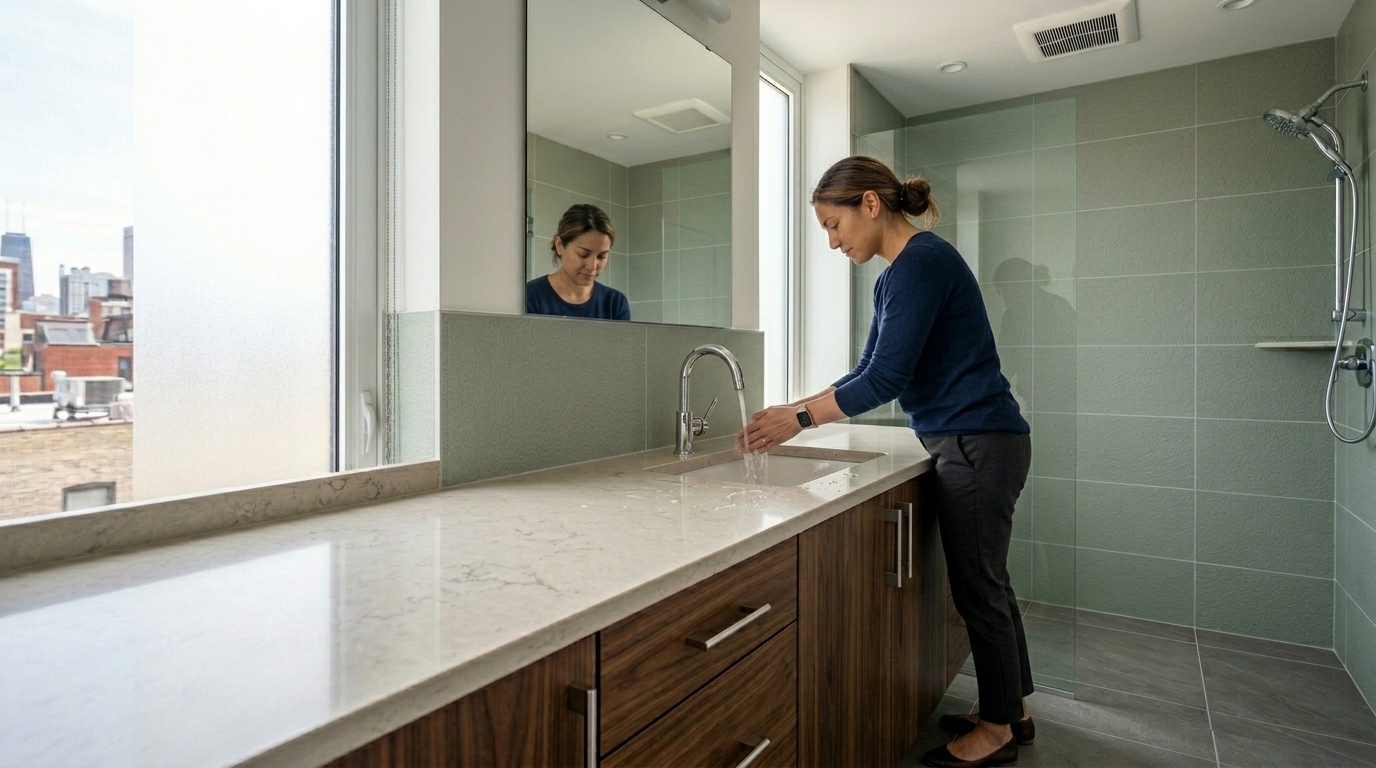
Bathroom tile should be ceramic or porcelain, not porous materials like marble or porous stone. Grout should be quality grout sealed against moisture penetration. Caulk around tile edges should be silicone, not acrylic, which deteriorates in moisture-rich bathrooms. Bathroom ventilation is critical: exhaust fans should run during and twenty minutes after showers to remove humidity. Without proper ventilation, even quality materials deteriorate faster.
Kitchen countertops should resist moisture and staining. Quartz is an excellent choice because it's non-porous, doesn't stain, and handles humidity without issues. Solid surface materials like Corian perform well. Laminate countertops are budget-friendly but less resistant to moisture damage than alternatives. Wood or butcher block countertops are beautiful but require maintenance and reseal regularly. Granite and marble are porous and require sealing, but perform acceptably in kitchens if properly maintained.
Sink selection matters. Quality stainless steel sinks resist corrosion in Chicago's humidity. Cheap stainless can stain and corrode. Composite sinks perform well and hide stains better than stainless. Cast iron and copper sinks are beautiful but require maintenance.
HVAC and Ventilation System Choices
Humidity control is essential in Chicago, making quality HVAC systems and ventilation important. Standard single-stage furnaces cycle on and off based on temperature, which means they don't run consistently enough to remove humidity in summer. Variable-capacity or multi-stage systems run longer at lower intensity, providing better humidity management. In Chicago's humid summers, humidity control matters as much as temperature control.
Energy Recovery Ventilators (ERVs) are valuable additions in Chicago homes. ERVs continuously exchange stale indoor air for fresh outdoor air while recovering energy from the exhausted air, minimizing heating and cooling costs. ERVs reduce indoor humidity and improve air quality, which is particularly valuable in basements and interior rooms without windows.
Dehumidifiers should be standard equipment in Chicago basements. Even well-managed basements benefit from dehumidifiers that maintain humidity below fifty percent. Chronic high humidity in basements (above sixty percent) encourages mold and speeds material deterioration.
Making Material Decisions for Your Chicago Renovation
When selecting materials for your renovation, prioritize Chicago climate performance over aesthetics or price alone. Talk with your contractor about which materials have performed well in Chicago homes and which have failed. Ask about local failure patterns they've observed. Contractors who've been in the Chicago market for years have real-world data about what works.
Budget slightly more for climate-appropriate materials. The cost difference between budget materials that fail in five years and quality materials lasting fifteen to twenty years is minimal when amortized across years. You're saving money by choosing right initially rather than replacing failed material prematurely.
Consider your willingness to maintain materials. Beautiful materials like wood siding, marble, or natural stone require regular maintenance in Chicago's climate. Budget-conscious homeowners might be happier with lower-maintenance alternatives that perform well without ongoing work.
The Long-Term Value of Smart Material Choices
Material selection affects your renovation's longevity, maintenance costs, and eventual resale value. A kitchen with quality, climate-appropriate materials that still looks beautiful after fifteen years adds value. A kitchen with failed material that needed replacement after five years didn't provide good value. Think long-term when selecting materials rather than just optimizing for initial cost.
If you're planning a renovation and want guidance selecting materials that perform well in Chicago's specific climate, Budget Construction Company has completed hundreds of renovations in this region. We know which materials perform well and which struggle. We can guide you toward choices that balance your budget, aesthetic preferences, and Chicago climate performance. Contact us for a consultation to discuss your renovation and learn which material choices work best for Chicago homes.
Related Posts
- Chicago Climate Flooring Guide: Choosing High-Traffic Floors That Survive Lake Michigan Winters and Humid Summers
- Best Materials for Chicago Small Bathrooms: Humidity, Cold Weather, and Durability Considerations
- Historic Chicago Home Flooring: Choosing Durable Floors for Victorian, Bungalow, and Greystone Properties