
How Long Does a Full Gut Renovation Take in Chicago Realistic Timelines for 2026

When you ask a Chicago contractor how long a gut renovation takes, you'll hear something like "four to six months" or "five to eight months." Then you'll set your timeline accordingly, arrange temporary housing if needed, and plan your life around that estimate. Six months later, you're still living with exposed walls, plastic sheeting, and construction noise. What went wrong? Understanding how Chicago's unique conditions affect renovation schedules helps you set realistic expectations and plan appropriately. A full gut renovation in Chicago rarely follows a simple linear timeline. Weather delays, permit backlogs, discovered structural issues, and the sheer complexity of updating systems in older homes all extend schedules beyond what initial estimates suggest.
The Honest Timeline: Twelve to Eighteen Months Is More Realistic Than Six
If your contractor quotes six months for a complete gut renovation, they're either underestimating scope or they're not accounting for Chicago-specific realities. Most completed gut renovations in the Chicago area take somewhere between ten and eighteen months from permit application to final walkthrough. A smaller project—a 1,500-square-foot bungalow with straightforward scope and no major structural surprises—might finish in ten to twelve months. A larger home, a historic property with preservation requirements, or a project that uncovers significant structural issues during demo easily stretches to sixteen to eighteen months or beyond.
This timeline includes the entire process: design and permit application, which takes two to four months in Chicago depending on project complexity and current city building department backlog. Then comes the actual construction period, which typically ranges from eight to fourteen months depending on your home's size, condition, and the contractor's efficiency. Finally, there's final inspection and certificate of occupancy, which adds several weeks of scheduling coordination with city inspectors. If you're selling your home after renovation, closing delays can extend your timeline further. Understanding that the entire process from initial decision to moving into your completed home typically spans a year or longer helps you make realistic decisions about whether to renovate, rent temporary space, or pursue phased remodeling instead.
Breaking Down the Timeline by Phase
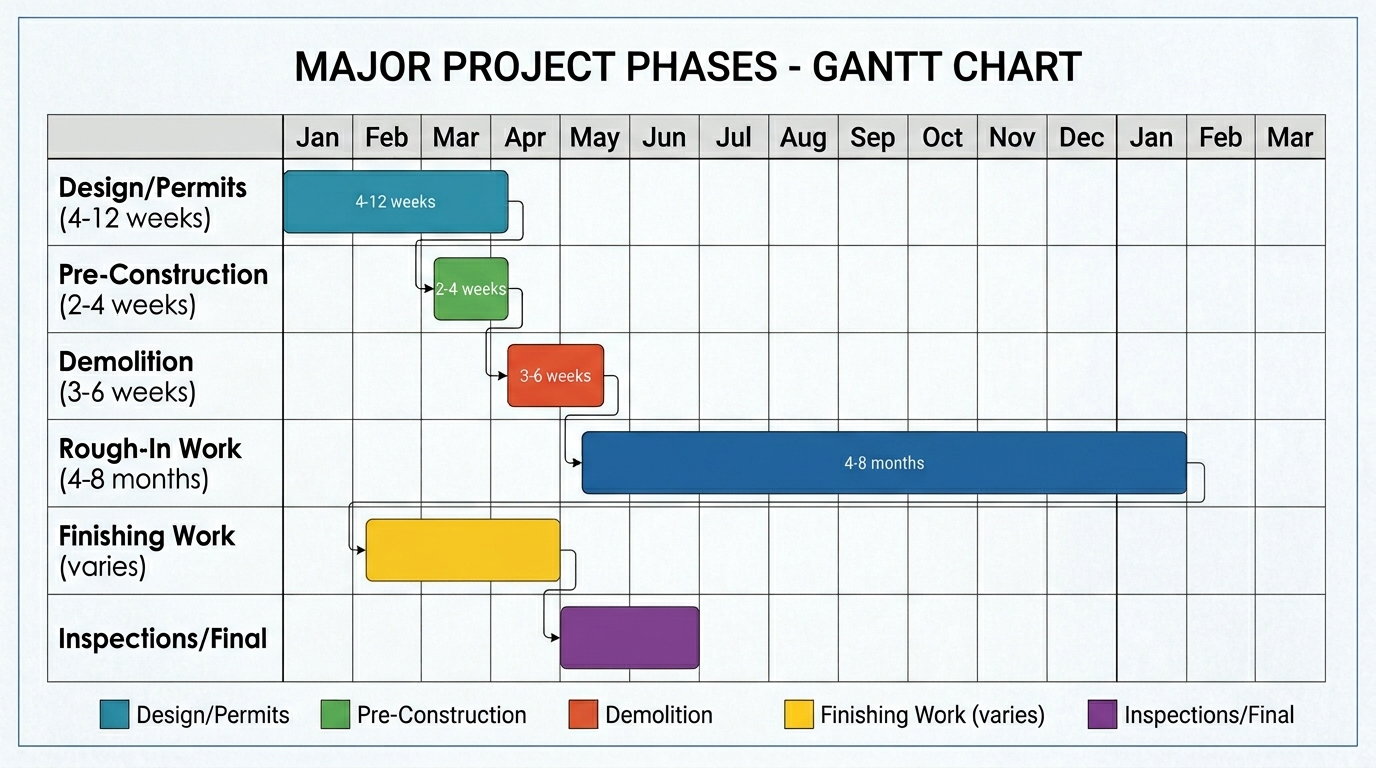
The design and planning phase typically takes four to eight weeks, though many homeowners spend considerably longer on this stage. This includes initial consultations, gathering inspiration, defining scope, selecting a designer or architect if needed, and moving from concept to detailed plans and specifications. You're making dozens of decisions about materials, finishes, layout changes, and system upgrades. Taking time here prevents costly changes mid-project. Some homeowners speed through this phase in three weeks; others spend three months refining their vision. Your pace here doesn't necessarily affect total project duration, but it determines when construction can actually begin.
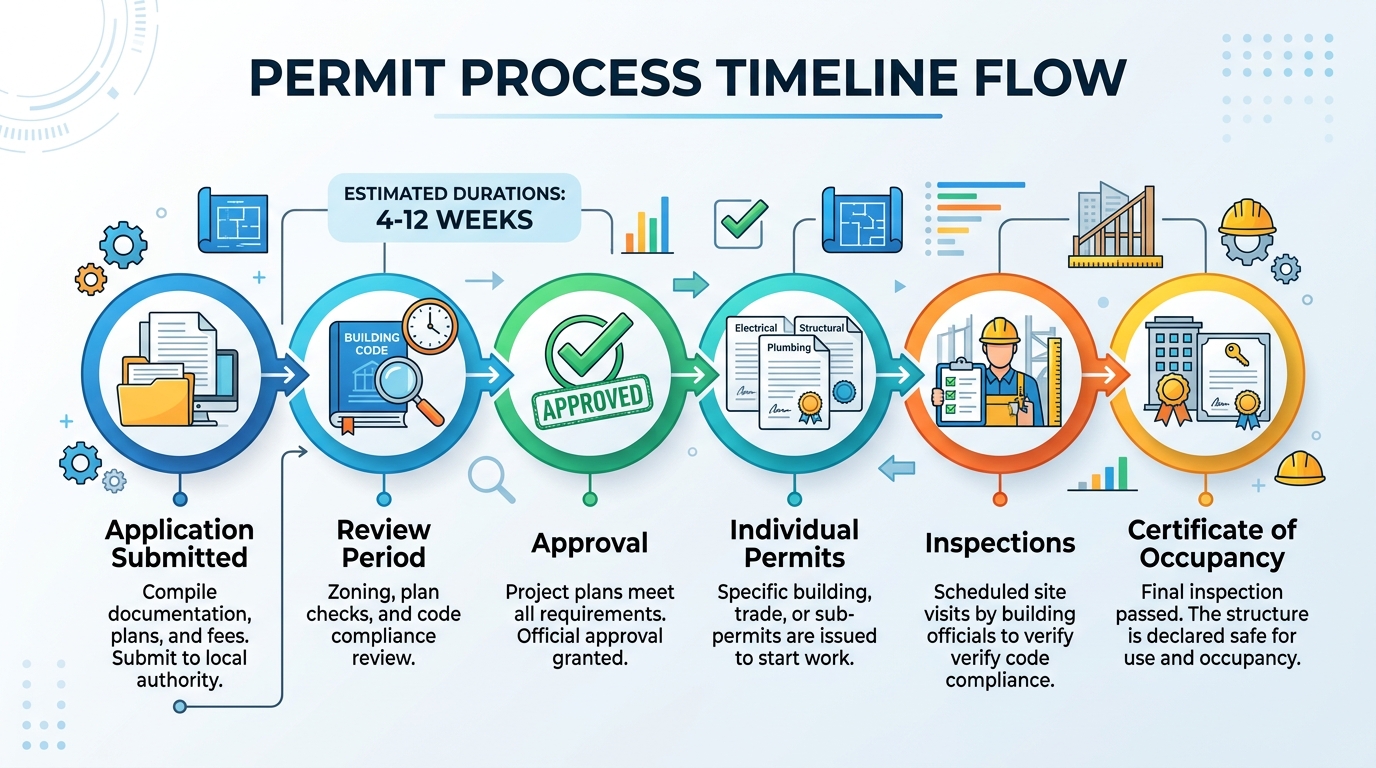
Once plans are finalized, the permit application phase begins. In Chicago, this typically takes four to twelve weeks depending on project complexity. Simple projects with minimal structural changes move faster. Complex projects involving structural additions, historic preservation requirements, or significant system upgrades require more detailed review. The Chicago building department processes applications in order received, and current backlogs mean wait times vary. If you apply during winter when fewer projects are pending, approval might come faster. If you apply in March when every contractor in the city submits simultaneously, expect delays. Many contractors can submit applications on your behalf, which saves time compared to DIY permit navigation. Once permits are approved and issued, you can legally begin construction.
Pre-construction work takes two to four weeks. This includes final site preparation, establishing construction barriers and dust containment, scheduling inspections, arranging material deliveries, and organizing contractor crews and subcontractors. This phase seems minor but sets the stage for everything that follows. Proper preparation prevents delays and chaos later. Some contractors combine this phase with early demolition work, while others treat it as a separate stage. Either way, expect the space to be chaotic and active without visible progress during these initial weeks.
Demolition and Rough-In Work: The Heart of Construction
Demolition typically takes three to six weeks, though complexity varies. A straightforward single-story bungalow with standard construction demolishes faster than a multi-story Victorian with plaster walls, lead paint requiring professional abatement, and asbestos tiles demanding specialized removal. In Chicago's older homes, environmental concerns often extend demolition timelines. Lead paint abatement can add several weeks and thousands of dollars if your home was built before 1978 and contains lead-painted surfaces. Asbestos removal—common in homes built before 1980—requires licensed environmental contractors and adds weeks and significant cost.
During demolition, structural issues often surface. A basement wall that looked intact suddenly shows water damage requiring foundation work. Roof framing reveals rot. Floor joists are undersized or compromised. These discoveries, while costly, are critical to address now rather than after walls are closed. Factor in one to two weeks of contingency time for structural surprises and remedial work.
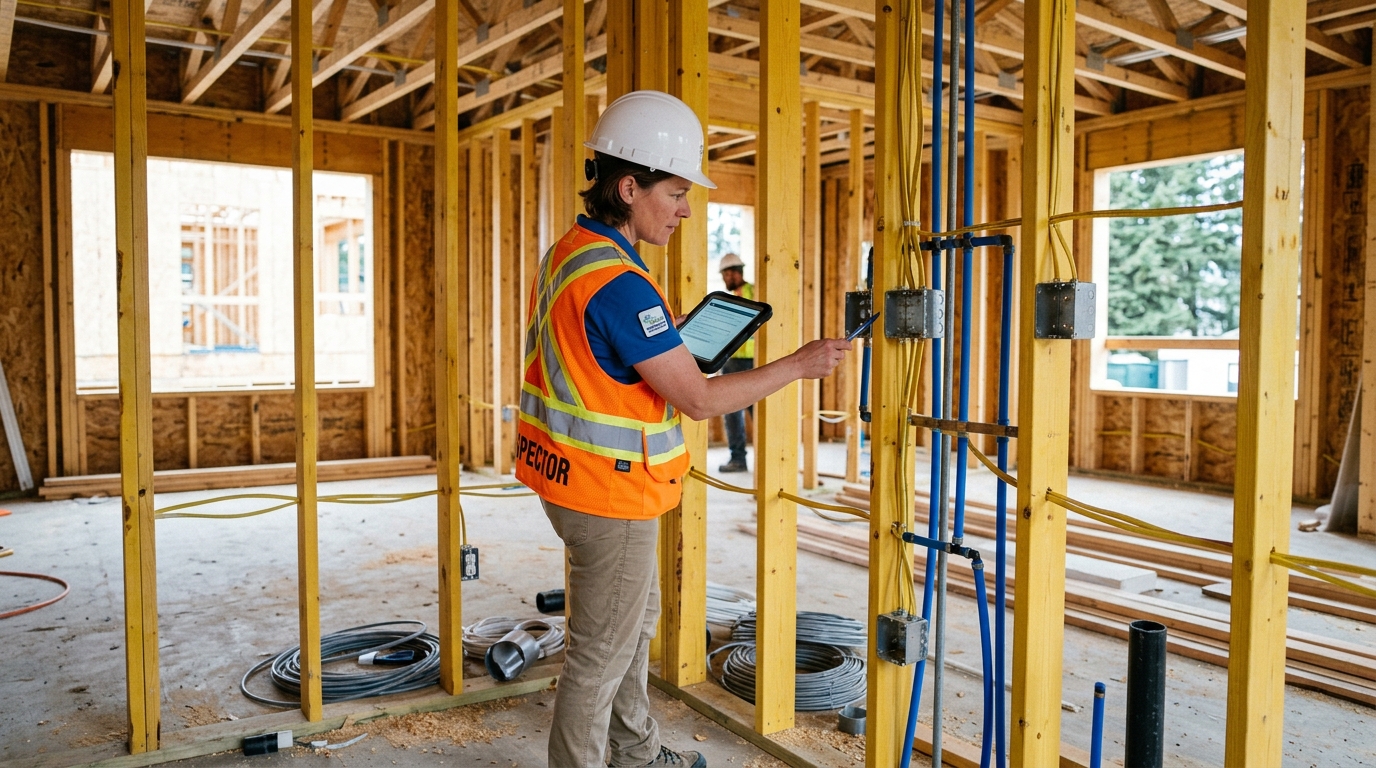
Rough-in work follows demolition and represents the bulk of the construction timeline: typically four to eight months depending on project size and complexity. This includes new framing, structural reinforcement if needed, HVAC installation and ductwork, electrical rough-in with all wiring and boxes installed, plumbing rough-in with all drain lines and supply lines positioned, and potentially foundation work if needed. Each trade must complete work in sequence with inspections between stages. You can't close walls until electrical is inspected. You can't rough in plumbing while framing is ongoing in the same space. These dependencies create a choreography that contractors must manage carefully.
Chicago's climate affects this timeline. Winter weather slows framing work. HVAC installation moves slower in cold temperatures. Concrete pours face freeze-thaw risks in cold weather. Some contractors adjust schedules to front-load winter work with framing and structural tasks that don't require concrete or curing time. Others schedule heavier mechanical work for spring and summer. Experienced Chicago contractors manage around seasonal constraints; inexperienced crews suffer delays from weather surprises.
Finishing Work and System Testing
Once rough-in is complete and inspected, finishing work begins: drywall installation and finishing (mudding and taping), which typically takes four to six weeks for a full home. Drywall finishing is deceptively time-consuming. It's not just hanging sheets; it's applying joint compound in thin coats, sanding between coats, and achieving smooth surfaces that won't show every imperfection when painted. Rushing drywall finishing leads to visible imperfections that compound during painting and become impossible to hide.
Painting, flooring installation, and trim work happen in parallel or sequence depending on contractor preference. Painting typically takes two to four weeks for a whole-home project. Flooring installation—whether hardwood, tile, luxury vinyl, or mixed materials—takes three to five weeks depending on square footage and complexity. Custom tile work takes longer than simple vinyl plank. Trim installation, including baseboards, door frames, and crown molding, overlaps with other finishing work and takes several weeks.
Mechanical systems testing and balancing happens during finishing phases. HVAC systems need commissioning and balancing to ensure proper airflow throughout the home. Plumbing needs pressure testing and inspection. Electrical systems need final inspection with all fixtures installed. These inspections prevent problems that would emerge after you move in. A thorough contractor builds in time for these critical steps rather than rushing to final walkthrough.
Inspections and Final Phases
Inspections happen throughout the process, not just at the end. Early inspections catch framing or structural issues that need correction before drywall covers everything. Mid-project inspections verify electrical, plumbing, and mechanical work meets code. Final inspections confirm the entire project is complete and code-compliant. In Chicago, if inspectors identify issues, you must correct them and request re-inspection, which extends timeline by one to three weeks depending on severity and inspector availability.
Final walkthrough and punch-list work takes two to four weeks. Your contractor provides a list of remaining small items to complete, and you identify any work that needs attention. Some items are quick fixes; others require additional subcontractor visits. Many homeowners underestimate how many small details still need completion at this stage. Paint touch-ups, adjusting doors that don't close smoothly, fixing cabinet hardware, cleaning thoroughly, and addressing minor cosmetic issues all take time.
The final certificate of occupancy comes after all inspection requirements are satisfied and the Chicago building department confirms the project is complete and safe for occupancy. This is what legally allows you to move into the renovated home. Without it, your insurance may not cover the space, your mortgage lender may refuse to finalize financing, and you're technically not permitted to occupy the home. Getting this certificate is non-negotiable.
What Extends Timelines Beyond Estimates
Several Chicago-specific factors commonly extend gut renovation timelines. Permit delays top the list. If the building department returns your permit application requesting clarifications or revisions, you're waiting weeks for resubmission, re-review, and approval. Plan for at least one round of permit revisions in your timeline.
Discovered structural issues during demolition are nearly universal in Chicago homes. Water damage, settling, outdated foundations, and failed systems hidden inside walls require remedial work. A contractor who discovered foundation issues causing structural settling might need to wait weeks for a structural engineer's assessment, then arrange foundation repairs, which adds four to eight weeks to the timeline.
Material delays affect construction schedules significantly. Lead times for custom cabinetry, special-order fixtures, and some appliances can reach eight to twelve weeks. If you order cabinets in month three of a four-month construction schedule, you'll be waiting for materials rather than installing finishes. Coordinating material orders with construction schedules prevents delays. Some contractors manage this by ordering long-lead items during the design phase before construction begins.
Weather impacts are substantial in Chicago. Heavy snow or ice storms don't just delay work on the day of the storm; they affect delivery schedules, subcontractor availability, and material staging for days afterward. Extreme cold slows concrete curing, HVAC installation, and other temperature-sensitive work. A contractor should account for one to two weeks of weather delays in their timeline, but worse-than-normal winters can extend this.
Subcontractor scheduling challenges frequently extend timelines. Your project depends on electricians, plumbers, HVAC technicians, and specialized tradespeople arriving when scheduled. If a plumber double-books and can't arrive when planned, your project waits. During busy seasons—spring through fall—subcontractor availability becomes constrained. Experienced contractors maintain relationships with reliable subcontractors and often schedule work six to nine months in advance. New contractors or those unfamiliar with Chicago markets struggle with subcontractor coordination.
What You Can Do to Keep Your Project on Schedule
Clear scope documentation prevents scope creep, which is the primary killer of project timelines. When you decide mid-project to move a wall, upgrade materials, or add features not in the original plan, you're adding weeks to the timeline. Detailed plans and specifications prevent these mid-course changes by locking in decisions early.
Building a one to two-month contingency buffer into your timeline acknowledges that delays happen. If your contractor says twelve months, plan for thirteen to fourteen months. This buffer prevents the frustration of expecting completion on one date and not achieving it due to inevitable delays. If the project actually finishes on the original twelve-month schedule, you're pleasantly surprised. If it takes fourteen months, you've already adjusted expectations.
Communicating clearly with your contractor about timeline expectations matters significantly. If you have a hard move-in date, a job opportunity that starts in eight months, or other external deadlines, your contractor needs to know this upfront. Some projects genuinely can't be accelerated. Others can, if you're willing to pay premium pricing for expedited work. Having this conversation at the beginning prevents misunderstandings later.
Monthly progress meetings keep you aligned with the contractor and aware of any timeline challenges emerging. If delays are accumulating, you can discuss whether the schedule can be adjusted, whether certain phases can be accelerated, or whether other solutions exist. Waiting until the expected completion date to discover you're actually three months behind isn't helpful for anyone.
Planning Your Life Around a Gut Renovation Timeline
If you're living in your home during renovation, understand that the project takes over your living situation for months. Dust from drywall finishing penetrates entire homes despite containment efforts. Construction noise continues from seven AM to five PM weekdays and sometimes weekends. Utilities may be interrupted for work. Bathrooms and kitchens may be inaccessible for weeks. If you have young children, pets, or significant health concerns, temporary relocation during the rougher phases (demolition and rough-in) makes life significantly more manageable.
If you're moving out for the duration, budget for temporary housing costs. Renting an apartment or small home for twelve to eighteen months is expensive but prevents your family from living in a construction site. Many homeowners find this cost worth the peace of mind and quality of life during renovation.
Working With Your Contractor to Manage Timelines
An experienced gut renovation contractor will provide a detailed timeline broken down by phase, with specific dates for major milestones: permit approval, demolition completion, rough-in completion, and final inspection. Comparing contractor timelines helps you identify realistic estimates versus optimistic ones. A contractor quoting six months for a full home gut renovation is either inexperienced or not factoring in Chicago-specific realities.
Monthly communication about progress, upcoming milestones, and any emerging delays keeps you informed and prevents surprises. A contractor who proactively tells you in month six that the project will take fourteen months instead of twelve is helping you adjust plans. A contractor who avoids the conversation and delivers bad news at month twelve has failed you as a partner in this significant investment.
The Bottom Line on Chicago Gut Renovation Timelines
A realistic gut renovation timeline for most Chicago homes ranges from twelve to eighteen months from design to final occupancy. Smaller projects move faster; larger projects or those with significant structural needs take longer. Planning for this duration, establishing clear communication with your contractor, and building contingency buffers into your schedule helps you navigate the renovation with reasonable expectations and fewer surprises.
If you're planning a gut renovation and want to discuss realistic timelines for your specific property, understand how Chicago's conditions affect your schedule, and identify a contractor who manages timelines professionally, Budget Construction Company can help. We've completed dozens of full gut renovations in Chicago and understand how our climate, permit processes, and older homes affect project duration. Contact us for a consultation to discuss your renovation timeline and hear realistic expectations for your home.